 STACKMODE
Stackmode builds websites that turn interest into a cleaner next step, whether you are an artist, founder, or service business.
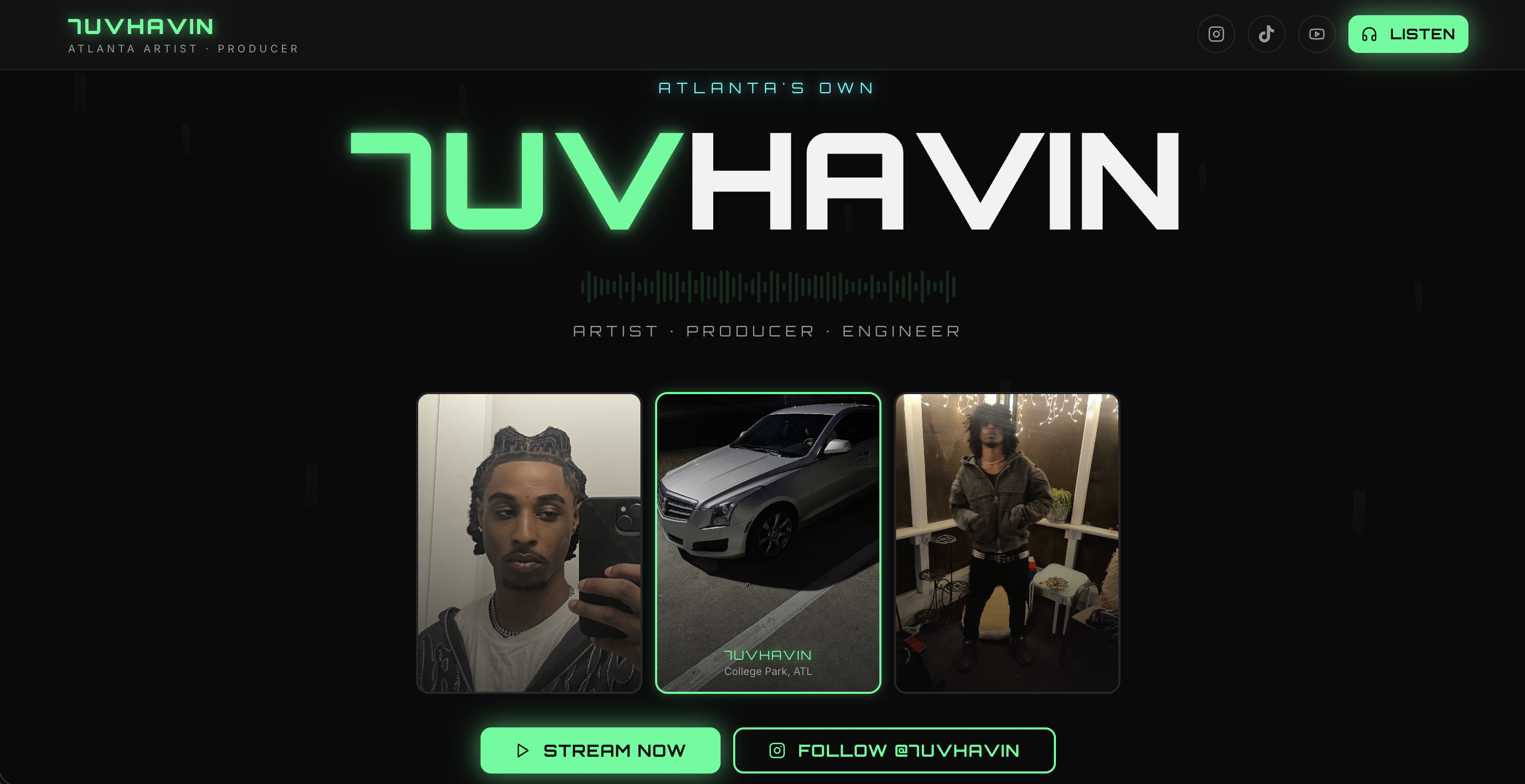
Introduction
An Atlanta rap artist website works best when it gives fans one clean destination for music, identity, and momentum. That was the goal behind building 7uvhavin.com: take scattered attention and turn it into a sharper online brand that actually feels like the artist.
The search intent behind this topic sits in two lanes at once. Some people want proof that a custom artist website is worth building. Others want to understand what a music artist website should actually include. This article answers both by using a real build instead of generic advice.
Featured snippet answer: Building a website for an Atlanta rap artist creates a branded home base that helps fans listen faster, helps search engines understand the artist, and gives media, collaborators, and new listeners a better place to land than a random collection of social links.
Problem
Most independent artists do not have an attention problem as much as they have a destination problem. People discover the music, see the clips, or hear the name, then have no clean place to go that ties the full identity together.
That gap costs momentum. A fan may see the artist on Instagram, find a track on YouTube, and hear a different story on another platform, but none of those touchpoints fully control the narrative. Without a website, the artist is borrowing visibility from platforms instead of owning a central brand asset.
- Search traffic gets split across profiles instead of reinforcing one main destination.
- Press, interviewers, and collaborators have no clean reference page to link to.
- New fans may not know where to listen first or which platform matters most.
- Visual identity feels weaker when every platform frames the artist differently.
Why This Matters
A strong independent artist website is not just about looking official. It matters because owned web presence helps with discovery, memory, and trust at the exact point where someone decides whether the artist is worth following more closely.
Google’s own SEO guidance emphasizes clear page structure, useful content, strong titles, and image context as part of helping search engines understand a page. That logic applies to artist pages too. If the page clearly says who the artist is, where they are from, what they do, and where to listen, both people and search engines get the story faster.
For a name like 7uvhavin, that matters even more. A distinct artist name is an opportunity if there is a strong branded page behind it. It becomes easier to grow around searches for the artist name, Atlanta artist variations, future interviews, and editorial mentions.
Main Solution
The solution was to build a site that behaves like a digital home base, not a throwaway landing page. Every section needed to make the identity clearer and move attention toward listening, following, and remembering the artist.
The homepage opens with the artist name in a bold visual system, a simple role line, and immediate CTAs. From there, the page uses visuals, story, and media placement to answer the unspoken questions fans and collaborators tend to have first: Who is this? What lane is he in? What should I click next?
Branded first impression
The site opens with a recognizable visual identity instead of generic music-template styling.
Clear listening path
The primary action is obvious, which means fans do not have to hunt for the next step.
Artist story section
A short backstory turns the page from a list of links into a real brand.
Interview and proof support
The structure leaves room for media and interviews that strengthen trust over time.
Step-By-Step Build
The best way to build a music artist website is to start with brand clarity, then layer the listening path, the visual proof, and the search structure. That sequence keeps the site from becoming a pretty but aimless page.
1. Define the search and brand intent
The primary keyword lane here was branded search around 7uvhavin, supported by artist, producer, Atlanta artist, and independent artist website intent.
2. Build the first screen around identity
The hero needed to show the name, the lane, and the listening CTA immediately so the page did not waste the first five seconds.
3. Give the visuals one recognizable language
The neon green on black treatment gave the site a memorable mood and made the brand feel deliberate instead of generic.
4. Add the artist story
A short background section gave context without burying the visitor in a long biography.
5. Use media as trust
Interview and supporting visuals help the artist feel documented, not just self-announced.
6. Keep the mobile path clean
Because most music traffic is mobile, the buttons and scrolling rhythm had to stay easy to use on a phone.
7. Point everything back to one destination
Every link and proof element supports the larger goal of making 7uvhavin.com the page worth sharing and linking to.
Common Mistakes
Most artist websites fail because they either copy social media too closely or chase aesthetics without giving the visitor a usable next move. The site has to feel like a brand and work like a funnel at the same time.
- Using a template that looks nothing like the artist’s actual world.
- Making every button equal priority instead of choosing a main CTA.
- Writing a vague bio that could describe almost anyone.
- Skipping location and scene cues that help with local relevance.
- Leaving the site disconnected from Spotify, YouTube, interviews, and future press mentions.
- Ignoring image alt text, page metadata, and internal linking opportunities.
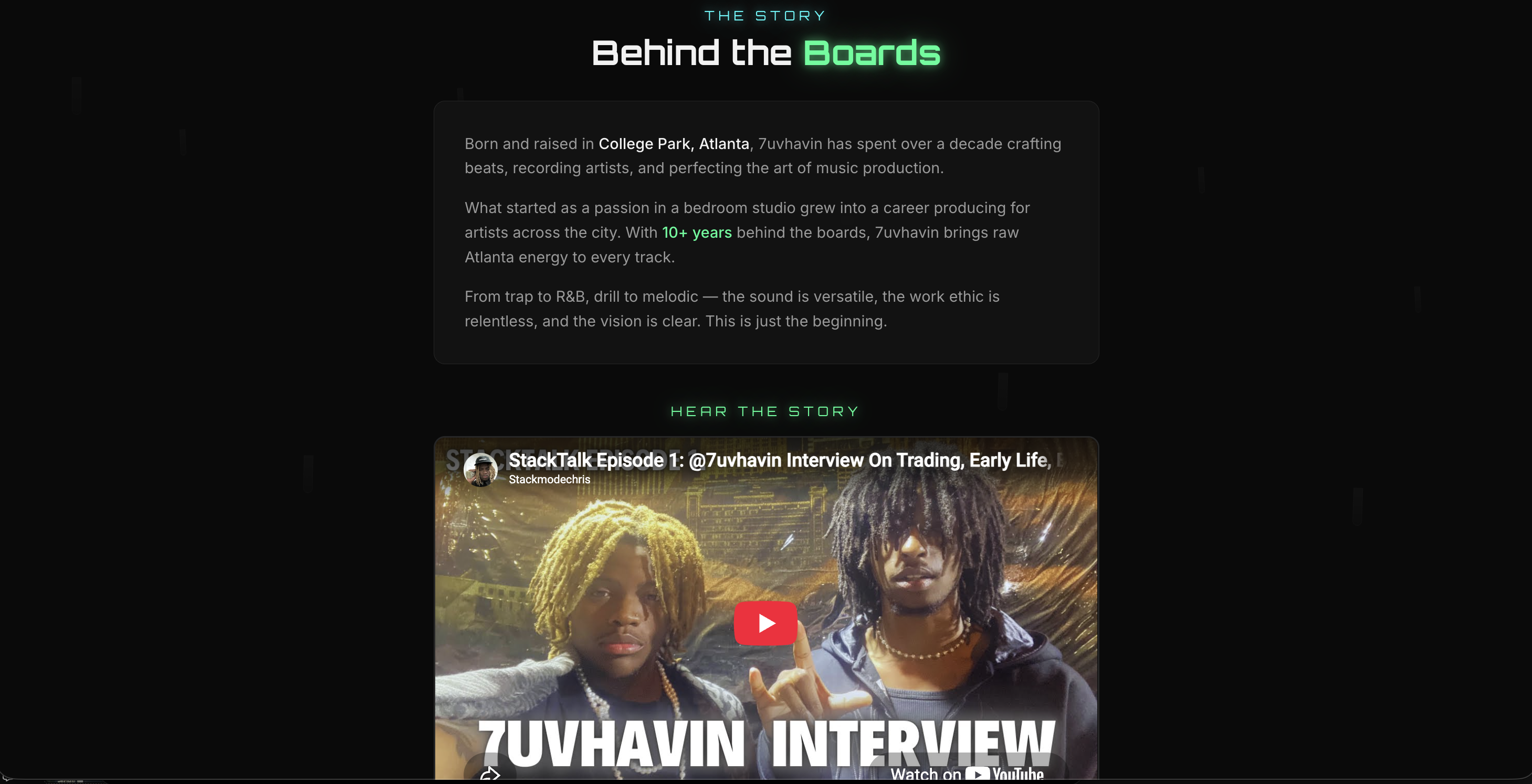
Case Study Example
What happened after the build was not magic. It was clarity. The site gave 7uvhavin a cleaner public-facing identity and a page that could support discovery better than disconnected social posts alone.
One of the strongest parts of the site is the balance between brand mood and practical direction. The story block explains that 7uvhavin is from College Park, Atlanta and frames his sound and work ethic without making the page text-heavy. Right below that, the media placement gives visitors another reason to stay and explore.
This is the difference between a brochure and a brand destination. A brochure says the artist exists. A destination makes it easier for fans, blogs, and collaborators to connect that existence to a real identity and a real next step.
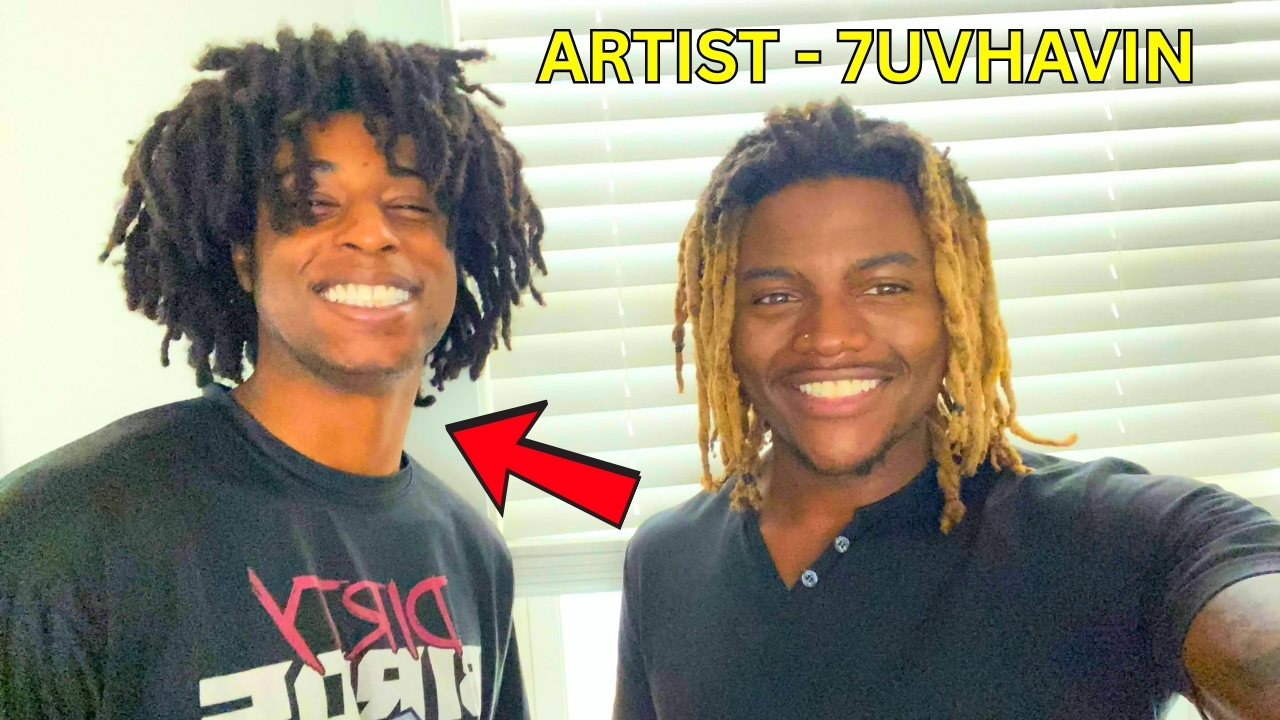
Expert Insights
The biggest lesson from this project is that artist websites should be treated like identity infrastructure. If the artist’s story, visuals, and listening path are strong, the site becomes useful for fans, SEO, media, and future business opportunities at the same time.
There is also a contrarian point here. A lot of people assume artists should ignore websites and put everything into social media. That is short-term thinking. Social feeds help with exposure, but an owned site helps turn exposure into memory. That matters when the artist name starts getting searched directly.
Another practical insight is that one strong branded page can support a full cluster later. From this base, the artist can add interview pages, release pages, lyrics pages, press assets, or an EPK-style section without rebuilding the whole identity from scratch.
Semantic keyword and entity coverage used for this article includes: Atlanta rap artist, Atlanta producer, independent artist website, music portfolio website, artist bio, streaming links, branded search, YouTube artist channel, Spotify for Artists, College Park Atlanta, music press, and artist discovery.
Best Backlink To Pursue
The best first backlink for this type of site is one relevant editorial link from an Atlanta music publication. It beats random directory links because it brings both local authority and a real audience that already cares about artists and releases.
Recommended backlink target: Immersive Atlanta
Immersive Atlanta publishes music coverage and publicly shares artist submission instructions. That makes it a strong first outreach target for an interview, premiere, or feature tied to 7uvhavin.com.
Best pitch angle: send the website, a concise artist bio, one strong press photo, the current release focus, and a clear Atlanta relevance angle.
Resources And Internal Links
The strongest SEO articles do not stop at one page. They connect to the right internal pages and cite outside sources that reinforce trust, ownership, and platform strategy. That makes the article more useful and helps readers keep moving.
Suggested Internal Links
Supports readers who want the broader website framework behind this case study.
Local SEO for Atlanta small businesses
Expands on how location signals and search structure support discovery.
How a new website will help your business grow
Reinforces why owned web presence matters beyond social media alone.
How to use Google Search Console
Gives readers the next step for measuring branded search growth.
Connects artist attention flow to conversion logic and CTA structure.
How to get monetized on YouTube
Matches artists who want their site and video strategy working together.
How Instagram can help your business grow
Shows how social traffic and owned pages should support each other.
Commercial next step for readers who want this outcome for their own brand.
Lets readers compare this build with other proof-driven website projects.
Keeps readers in the content system and improves article session depth.
Authoritative External Sources
Google’s own documentation for crawlability, titles, snippets, and image context.
Spotify for Artists profile guidance
Useful for aligning the website with the artist’s streaming identity.
Spotify for Artists getting started
Explains profile setup, distributor flow, and artist profile control.
YouTube Official Artist Channel guide
Shows how artists can consolidate presence and discovery on YouTube.
Supports the ownership side of music, visuals, and original works.
Frequently Asked Questions
These questions cover the practical concerns behind building a website for an Atlanta rap artist: discovery, structure, search visibility, platform strategy, backlinks, and whether the site creates a real advantage beyond social media alone.
Why does an Atlanta rap artist need a website if social media is already working?
Social platforms are useful for reach, but they are rented space. A website gives the artist one place to control the brand, organize links, rank for name-based searches, and capture interest when people want more than a short clip. It also keeps momentum from depending on one app feed.
What should a rapper website include first?
The first version should include a strong headline, music links, social links, visuals that fit the brand, a short bio, and one clear next step. That next step can be listening, following, watching, or contacting. The goal is not to add everything. The goal is to remove confusion fast.
Can an artist website help with Google search visibility?
Yes. A focused artist website gives Google a clean entity page for the artist name, location, visuals, and supporting content. That matters for branded searches, interview pages, and future press mentions. It also creates a page other sites can link to instead of splitting attention across disconnected profiles.
What makes a music artist website feel professional?
Professional artist websites feel intentional. The typography, visuals, buttons, and sections all point in the same direction. The site should look like the artist, not like a recycled template. It should also load cleanly on mobile, because most fans will see it on their phones first.
Is one-page design enough for an independent artist website?
For many newer artists, yes. A one-page site can work well when the goal is discovery and brand clarity. The key is making each section earn its place. If the artist starts adding merch, press, tour dates, or multiple releases, the site can grow into a larger structure later.
How do artist websites convert attention into real fan action?
They reduce friction. Instead of asking a visitor to search around different apps, the site gives them one place to listen, follow, watch, and learn the story. Each click becomes easier. That improves the odds that curiosity turns into a stream, a follow, a repeat visit, or a business inquiry.
What is the biggest mistake artists make with their websites?
The biggest mistake is building a site that looks cool but does not direct people anywhere. Fans should not have to guess what matters most. If the page has no listening CTA, weak identity, slow load, or messy mobile layout, the brand loses the attention it worked hard to earn.
Should an artist website link to every platform?
It should link to the platforms that matter most right now. Too many equal-priority buttons can water down the experience. A better approach is to prioritize the main listening action, the main social platform, and the strongest proof element, then keep the rest available without making the page feel crowded.
How important is mobile design for a rapper website?
It is critical. A music site that only looks good on desktop will underperform. Fans find artists from TikTok, Instagram, YouTube, and text threads, which means the click usually happens on mobile. The buttons, text sizing, and visual hierarchy all need to work on a small screen first.
Can a custom website help an artist look more serious to blogs and collaborators?
Yes. A strong website signals effort, consistency, and readiness. When a blog, producer, videographer, or promoter looks up the artist, the site becomes a clean reference point. It shows that the artist is building an actual brand, not just posting content and hoping people connect the dots.
What keyword should an artist website target first?
The first keyword target is usually the artist name, along with close variations tied to role and place, such as Atlanta artist, Atlanta rapper, or Atlanta producer. That branded foundation is more realistic and more useful than chasing broad national phrases too early.
Why does visual consistency matter so much for musician websites?
Visual consistency creates memory. If the site colors, photos, typography, and section styling all feel related to the artist, the visitor remembers the brand better. That is especially important in music, where fans often discover someone quickly and may come back later after hearing another song or clip.
Should a music artist website include a bio even if fans mostly care about songs?
Yes, but the bio should be tight and useful. Fans, interviewers, playlist curators, and blogs all want context. A short story about where the artist is from, what they do, and what makes them distinct helps turn a name into a real identity without forcing the visitor to read a full essay.
How do you know if an artist website is actually working?
You look at behavior. Are people clicking the listen button, staying on the page, visiting from branded searches, and using the links you want them to use? The site is working when it removes confusion and gives attention a better path than a loose collection of disconnected profiles.
Can a website help an artist beyond fan discovery?
Absolutely. It can support press outreach, booking inquiries, link sharing, branding partnerships, and long-term search presence. A website is not just for fans. It is also for anyone evaluating whether the artist is organized, serious, and worth paying attention to.
What type of images work best on an artist website?
Images should reinforce identity, not just fill space. Good artist site images show attitude, setting, and personality. They also need to be sharp, well-cropped, and placed near the right text or CTA. Random stock images usually weaken the brand instead of helping it.
Does an Atlanta artist benefit from location cues on the website?
Yes. Location cues help both people and search engines understand the scene around the artist. Mentioning Atlanta or College Park naturally can support branded search relevance, local press fit, and context for collaborators who want to know what world the artist comes from.
What is a realistic first backlink goal for a music artist website?
A realistic first backlink goal is one strong, relevant editorial mention from a local music publication, interview, or profile. One contextual link from a trusted Atlanta music site can be more useful than a pile of weak directory links because it brings both authority and actual music audience relevance.
How often should an artist website be updated?
It should be updated whenever the brand has something real to show: a release, a new visual, a press feature, a new interview, or better photos. The site does not need constant changes, but it should not become stale. Small updates keep it accurate and worth revisiting.
What happened after building 7uvhavin.com?
The immediate result was clarity. Instead of sending people to a loose mix of social pages, there was a single destination that looked like the artist, introduced the story, and pointed visitors toward listening and following. That kind of clarity is the first practical win before bigger SEO or press gains compound.
Conclusion
Building a website for an Atlanta rap artist works when the site becomes the clearest version of the brand online. That is what happened here. The result was not just a cleaner design. It was a stronger destination for attention, a better page for branded search, and a more credible link to share with fans and media.
If you want to see the finished example, visit 7uvhavin.com. If you want a site that gives your own brand this kind of clarity, start with the first screen, the main CTA, and the story you want people to remember after they leave.
Want Stackmode to build yours? Visit our website services page or book the strategy call and bring your links, best visuals, current offer, and the exact action you want visitors to take.
Need A Website That Makes Your Brand Feel Real?
Pick one clean next action instead of bouncing around the site.
Websites & Ads
Websites & Ads Design/Management
Book the website and Meta ads lane for design, SEO structure, conversion flow, and ongoing management.
Trading
1-on-1 Trading Mentorship $100/hour
Direct educational mentorship with StackmodeChris on planning, risk, execution, and review.
Academy
Join The Academy $50/month
Get the ongoing business, marketing, technology, and trading education path inside the full Stackmode Academy.