
Catch Our Trades gives you planned levels, entries, recaps, and market breakdowns to study alongside your own options process.
Quick Answer: Use Options as a Defined-Risk Tool, Not a Guaranteed Income Machine
Options can generate income opportunities when you understand the underlying asset, choose a setup with a clear reason, define the loss before entry, and manage time to expiration. The easy part is placing an order. The difficult part is selecting trades that fit your plan and keeping size small enough to survive being wrong.
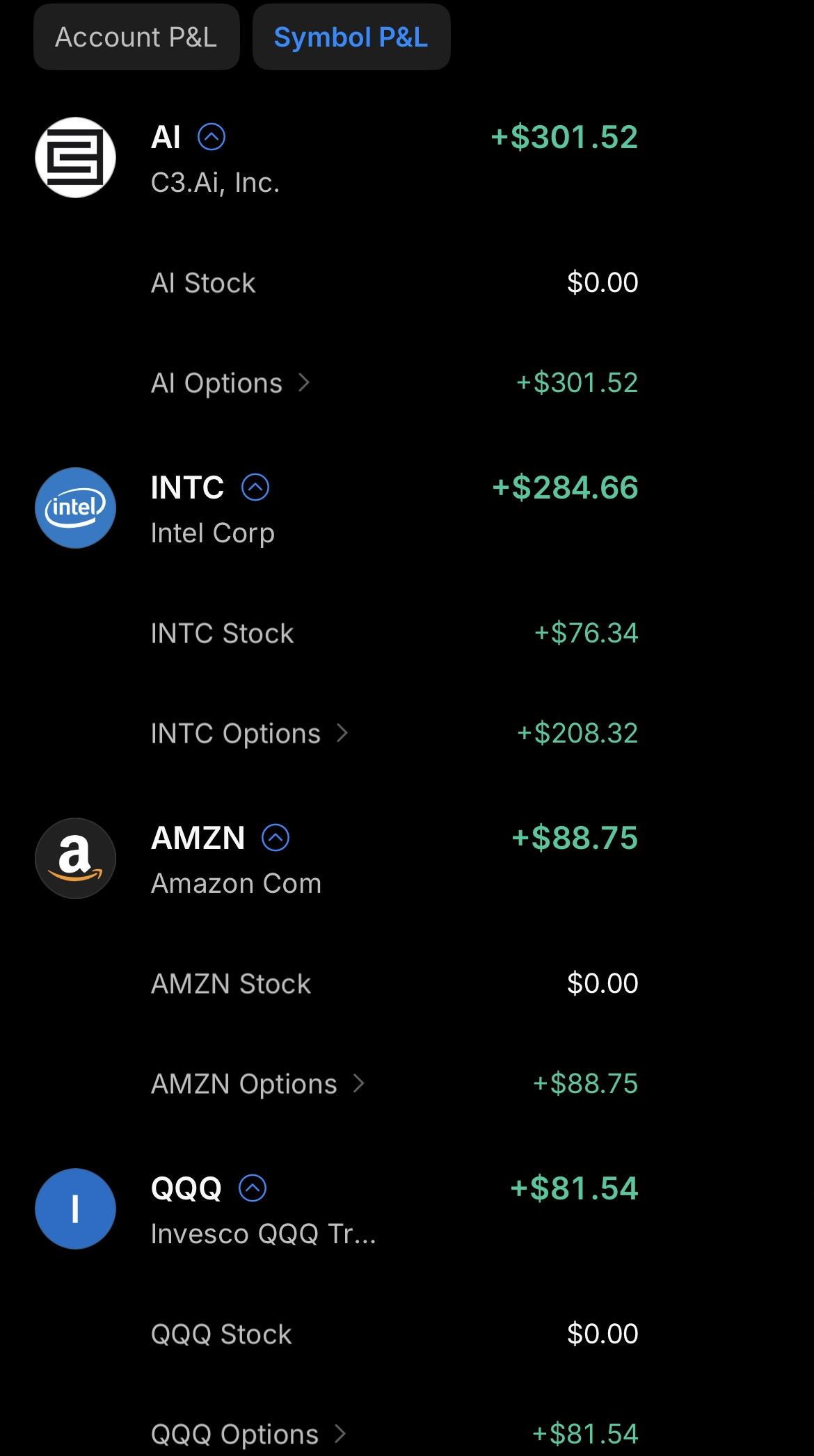
In the StackmodeChris video, the screenshots show an options chain and account results across several symbols. Those images are examples of a personal trading process, not a promise that the same outcome will repeat. Use them to study how a trader connects a market idea to a contract, then build your own rules before risking money.
Watch the Video: How Options Can Create Income Opportunities
Watch the original StackmodeChris lesson first, then use this guide to slow down the decisions behind the screenshots: underlying selection, contract choice, entry, risk, exit, and review.
The Options-Income Framework: Underlying, Setup, Contract, Exit
A repeatable options process starts with the underlying chart, not with a random contract that happens to be cheap. The chart gives you the market thesis. The option contract translates that thesis into a position with its own expiration, pricing, liquidity, and risk behavior.
1. Underlying
Choose a stock or ETF you can understand, follow, and trade with enough liquidity for your plan.
2. Setup
Define the level, trend, support, resistance, catalyst, or pattern that gives the position a reason.
3. Contract
Compare call or put direction, strike, expiration, premium, spread, volume, and open interest.
4. Exit
Write the profit-taking plan and invalidation before entry so the position is not managed from panic.
This sequence prevents the common mistake of starting with a contract and then inventing a reason for it. A low premium is not automatically low risk. Time, implied volatility, spread, and the underlying move all affect what happens next.
How To Read an Options Chain Before You Enter
The options chain shows the available strikes, bid and ask quotes, volume, and expiration choices. In the supplied GLD screenshot, the chain is organized by expiration and separates calls from puts. Read the contract details before thinking about the potential profit.
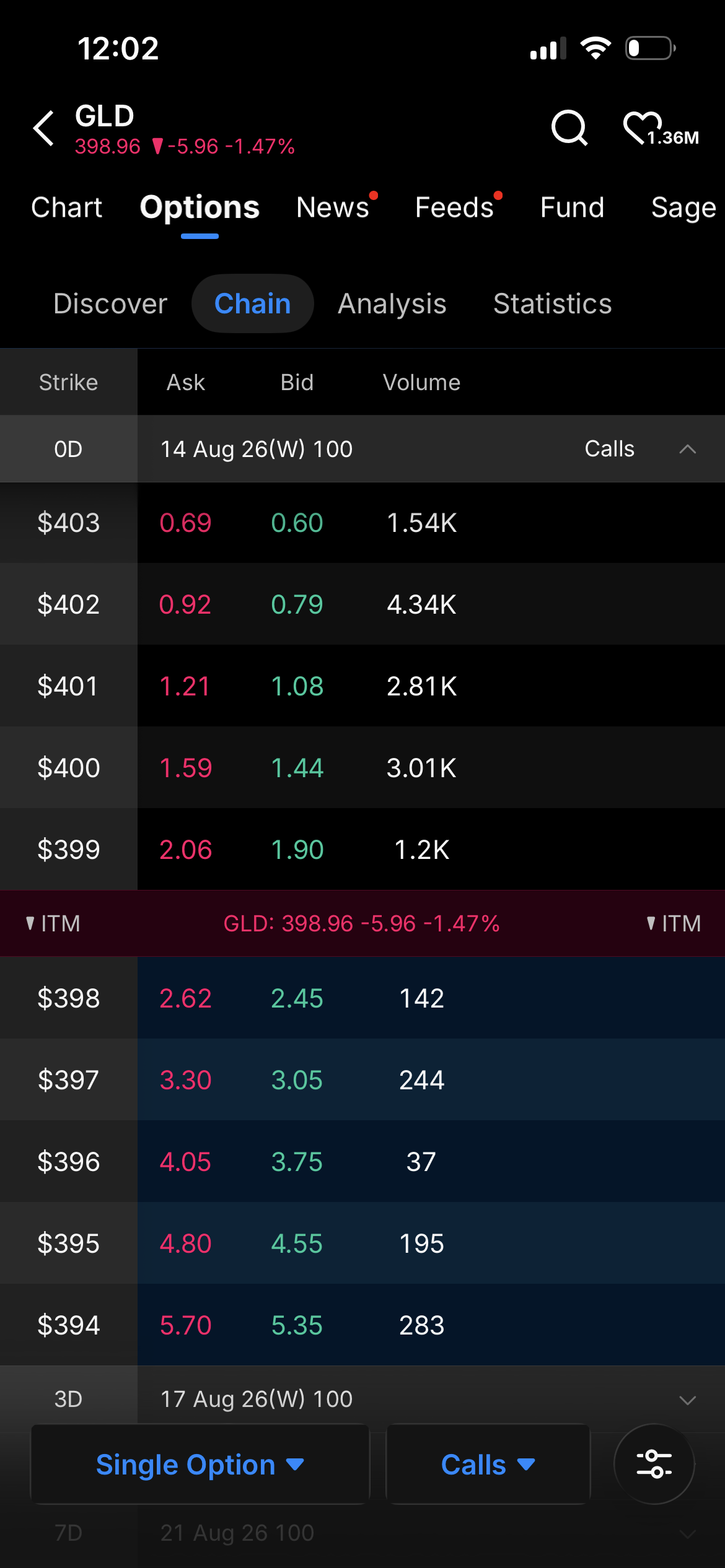
- Underlying: confirm the symbol and understand what the option derives its value from.
- Expiration: note how much time remains and what happens if the move takes longer than expected.
- Call or put: calls generally express a bullish right to buy, while puts generally express a bearish right to sell. Sellers accept different obligations.
- Strike: compare the strike with the current underlying price and the level in your chart plan.
- Bid and ask: a wide spread can increase the cost of entering or exiting and make fills less predictable.
- Volume and liquidity: active contracts can still move quickly, so liquidity is a filter, not a guarantee.
Build the Trade Plan Before the Option Order
Write the plan before the order because options can move quickly and their value can change even when the underlying barely moves. Your plan should be short enough to read during the session and specific enough to prevent improvisation.
| Plan Field | What To Write | Why It Matters |
|---|---|---|
| Thesis | What is the chart expected to do and why? | Keeps the contract connected to a real market idea. |
| Entry | What level or confirmation triggers the trade? | Reduces chasing after a move has already happened. |
| Maximum loss | What dollar amount or percentage ends the idea? | Makes risk real before emotion enters. |
| Profit plan | Where will you reduce or close the position? | Prevents a good move from becoming an unplanned hold. |
| Time limit | What happens if the move does not arrive? | Expiration and time decay make waiting part of the risk. |
For a simple review habit, record the setup, contract, entry, exit, result, rule-followed score, and one lesson after every trade. Compare the process across a meaningful sample before changing size or strategy.
Common Options Mistakes That Make Income Look Easy
A screenshot can make a winning trade look simple because it shows the result after the uncertainty has passed. The hard work is selecting the contract, managing the position, and surviving the trades that do not work.
- Buying cheap contracts: a low premium can reflect low probability, little time, a wide spread, or weak liquidity.
- Ignoring expiration: time is part of the contract, and waiting can change the trade even when the thesis remains reasonable.
- Using too much leverage: options can magnify gains and losses, which makes sizing more important than excitement.
- Trading a screenshot: a past result does not tell you the next entry, spread, size, or market condition.
- Selling without understanding assignment: some short-option positions can create obligations and losses beyond the premium received.
If the contract is difficult to explain, skip it. Missing a trade is a smaller problem than taking a position whose risk you cannot describe in one sentence.
Risk, Approval, and the Honest Limit of Options Income
The SEC's Investor Bulletin on options explains that an option buyer can lose the entire premium if the option expires out of the money. FINRA also notes that options are complex, require brokerage approval, and can carry different risks depending on how they are traded.
Use the supplied income screenshots as proof of a particular result, not as a forecast. The displayed amounts and symbols are not a current recommendation, and market conditions, pricing, spreads, volatility, expiration, account size, and execution can all change the outcome.
Honest limit: options can generate income opportunities, but no options strategy guarantees income. Never fund options trading with money needed for living expenses, and do not increase risk because one result looked easy after it happened.
Before trading, read FINRA's options basics and Greeks guide and the options risk disclosure provided by your brokerage firm.
FAQ
Can options generate income easily?
Options can create income opportunities, but they are not easy or guaranteed. The process requires product knowledge, a defined setup, controlled sizing, expiration awareness, and the ability to accept losses.
What should I understand before trading an option?
Understand the underlying asset, call or put direction, strike price, expiration date, premium, spread, liquidity, maximum planned loss, and what would make the trade invalid before entering.
Can an option buyer lose the entire premium?
Yes. If an option expires out of the money, the buyer can lose the entire premium paid. The actual risk depends on the contract, strategy, expiration, and how the position is managed.
How much money should I use for options?
There is no universal amount. Use only risk capital and size the position according to a written loss limit that fits your finances and experience. Do not use money needed for living expenses.
Do I need brokerage approval to trade options?
Brokerage firms generally require an options application and approval level before customers can trade options. Approval requirements and permitted strategies vary by firm and account.
If you want to work through entries, exits, chart reading, and risk with support, start with Stackmode trading mentorship.
Best-Fit Framework: What This Topic Can and Cannot Tell You
This Is How I Use Options to Generate Income EASILY is best understood as an educational framework: define the decision, compare the available choices, verify current evidence, and keep the downside explicit before acting.
| Option or lens | Best for | Honest limit |
|---|---|---|
| Definition | Clarifying what the topic actually means | A definition does not predict a market outcome. |
| Process | Turning the idea into repeatable research steps | A process still depends on execution and current conditions. |
| Risk check | Sizing uncertainty and writing invalidation rules | Risk controls reduce exposure; they do not remove loss. |
Research Checklist and Related Stackmode Lessons
Use primary sources for current rules and the related Stackmode pages for connected market context. The links are learning paths, not promises that a result will transfer from one market or person to another.
Visual Study Opportunities
These are useful visual checkpoints for a future revision or companion graphic. They make the explanation easier to scan without presenting an unverified chart, number, or performance claim as proof.
- 1. A one-sentence definition card with the key term highlighted.
- 2. A labeled process diagram showing research before execution.
- 3. A comparison table with the same criteria across alternatives.
- 4. A before-and-after example that clearly labels assumptions.
- 5. A timeline showing which facts are current and which are historical.
- 6. A risk ladder from low complexity to high complexity.
- 7. A checklist for source, date, cost, liquidity, and invalidation.
- 8. A worked example using hypothetical values rather than a promise.
- 9. A common-mistakes graphic with the correction beside each mistake.
- 10. A final decision tree showing when to pause and verify more evidence.
Expanded FAQ
What is the main idea of this article?
The main idea is to understand this is how i use options to generate income easily as a process with defined assumptions, risks, and verification steps rather than as a guaranteed outcome.
Who is this article for?
It is for readers who want an educational framework before making a market, trading, or investing decision.
What should a beginner do first?
Start with the definition, identify the instrument or market involved, and write down the risk before thinking about an entry or action.
What information should be verified?
Verify the product rules, current data, costs, timing, liquidity, source date, and any claim that could change the decision.
What is the biggest mistake to avoid?
The biggest mistake is treating an educational explanation as a promise and skipping independent risk checks.
How does risk management fit in?
Risk management sets the position size, invalidation point, maximum loss, and review process before execution.
Can this approach guarantee a profit?
No. Markets are uncertain, and no framework can guarantee a profit or remove loss risk.
How current is this information?
Market rules, prices, products, and policy can change, so check the dated primary source before acting.
Should this replace professional advice?
No. It is general education, not personalized financial, tax, legal, or investment advice.
How should readers compare alternatives?
Compare the same criteria: purpose, issuer, liquidity, costs, volatility, custody, time horizon, and honest limitations.
What should be written in a trading plan?
Record the thesis, setup, entry condition, invalidation, size, maximum loss, exit logic, and review date.
Why do source dates matter?
A dated source shows when a rule, number, or statement was true and helps expose stale or unsupported claims.
How can readers reduce confirmation bias?
Write what would disprove the thesis, review opposing evidence, and avoid relying on one headline or one chart.
What is a sensible next step?
Use the article as a checklist, verify the primary sources, and practice with risk that is small enough to survive mistakes.
Where can readers continue learning?
Use the linked Stackmode lessons for market context and the linked regulator or exchange resources for current rules.
Conclusion: Use the Framework, Then Verify the Decision
This Is How I Use Options to Generate Income EASILY is best understood as an educational framework: define the decision, compare the available choices, verify current evidence, and keep the downside explicit before acting. The useful takeaway is not a prediction. It is a repeatable process: define the topic, compare the available choices, verify current sources, size risk conservatively, and record what would change your mind.
Stackmode provides educational market context, not guaranteed returns or personalized financial advice. Recheck current rules, prices, liquidity, and tax implications before acting.
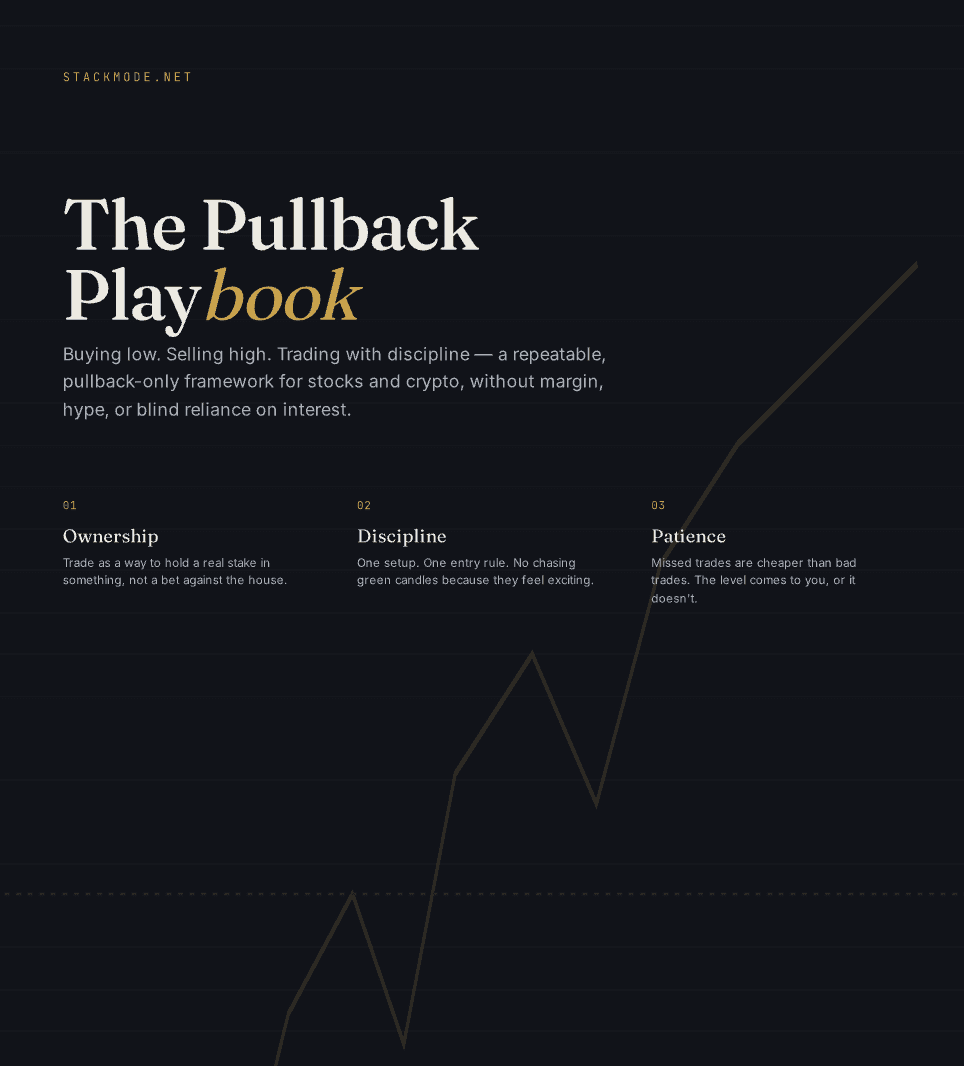
Free trading playbook
Build the plan before you place the trade.
Get the Stackmode playbook for pullbacks, risk limits, entries, exits, and trade review. It is a practical first step before you sign up for the Trading School.
- • Define the setup before entry
- • Mark invalidation and risk
- • Stop chasing moves
- • Review decisions, not just results
Opens the external Stackmode playbook page. Education only.
Trading Books
Keep Learning After The Article
Pick the book that matches the skill you want to practice next. Each one gives you a focused framework to work through after this article, with Amazon paperback and eBook options available.
Recommended starting point
Neuro Trading
Master the psychology of trading.
- Why 90% of traders lose and how to think like the 10%
- Emotional discipline techniques used by stronger traders
- A mindset framework built for long-term execution
eBook
$9.99
Paperback
$19.99
Audiobook
$9.99
Before The Hype
How to spot opportunities before they go viral.
- Learn the asset stacking strategy for long-term wealth
- Find high-signal trends before they become crowded
- Think earlier instead of chasing late momentum
eBook
$9.99
Paperback
$19.99
Audiobook
$9.99

Freedom Money
Understand Bitcoin and what it does.
- A cleaner beginner path into Bitcoin
- Protect and grow money with stronger awareness
- Build conviction before you move capital
eBook
$9.99
Paperback
$19.99
Audiobook
$9.99
Study Options Setups With More Context
Pick one clean next action instead of bouncing around the site.
START HERE
Stackmode Trading School
Join the school for live classes, market review, organized lessons, StackFinder access, and member support. $499/year — StackFinder included.
Best value
StackMode Trading School
Live group sessions, stock and crypto market review, organized video lessons, StackFinder access, and a Halal spot-trading framework. $499/year.
Live class plan
Live Group Sessions Included
Bring questions, review charts, and learn the same repeatable process with students moving through the class plan together.
StackFinder
StackFinder Member Tools
AI scanner, personal watchlist, daily stock and crypto setups, dashboards, and trade-prep tools are included with the group.
Education and risk disclosure
Stackmode provides education, tools, examples, and market commentary only. Nothing on this site is personalized financial, investment, tax, or legal advice, and no result, trade recap, screenshot, testimonial, alert, or example is a promise of future performance. Trading and investing involve substantial risk of loss, including the possible loss of capital. You are responsible for your own decisions, position size, broker selection, tax treatment, and compliance with the laws and rules that apply in your location.
Read the full risk disclosure