
Get 1-on-1 trading mentorship with StackModeChris and learn how to connect catalysts, levels, entries, exits, risk, and post-trade review.
Quick Answer: Intel Had the Catalyst, but the Chart Paid the Trade
Intel had a major catalyst after the U.S. government agreed to invest in Intel common stock, but the +$310.88 trade was not about blindly buying news. The money came from matching the catalyst with support, buyer reaction, resistance, and a planned sell zone.
The lesson is simple: news can bring attention, but the chart still decides where risk makes sense. A government-backed Intel headline can create momentum, but a trader still needs an entry, invalidation point, target, and exit rule.
Watch the Intel Trade Recap
This article expands the StackModeChris video into a written recap. Watch the video first, then use the breakdown below to separate the Intel news catalyst from the actual trading process.
What Intel Announced With the U.S. Government
Intel announced on August 22, 2025 that the U.S. government would make an $8.9 billion investment in Intel common stock as part of an agreement connected to American technology and semiconductor manufacturing leadership.
Intel said the investment would be funded by $5.7 billion in previously awarded but unpaid CHIPS Act grants and $3.2 billion from the Secure Enclave program. Intel also said the total government investment reached $11.1 billion when including $2.2 billion in CHIPS grants already received.
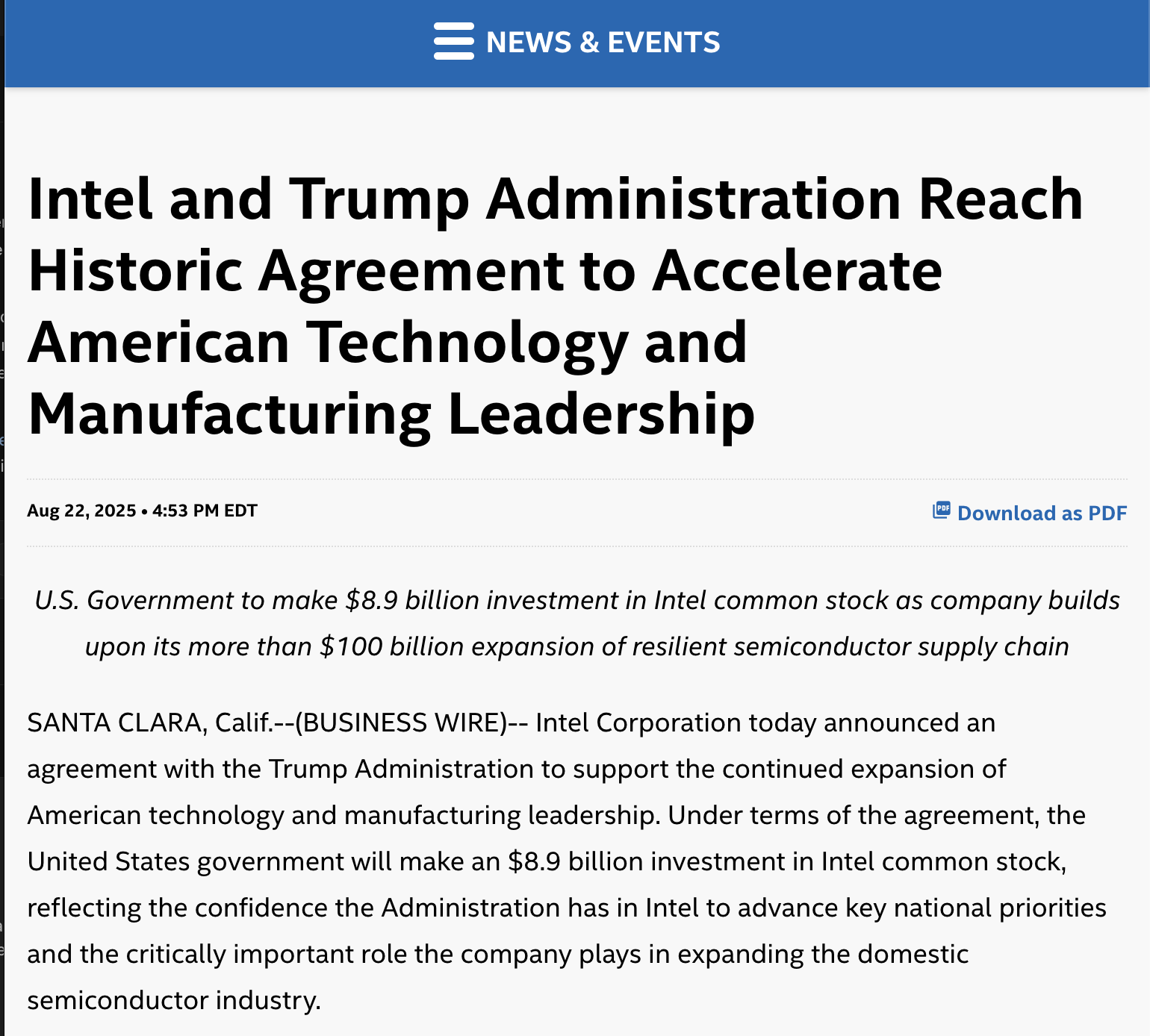
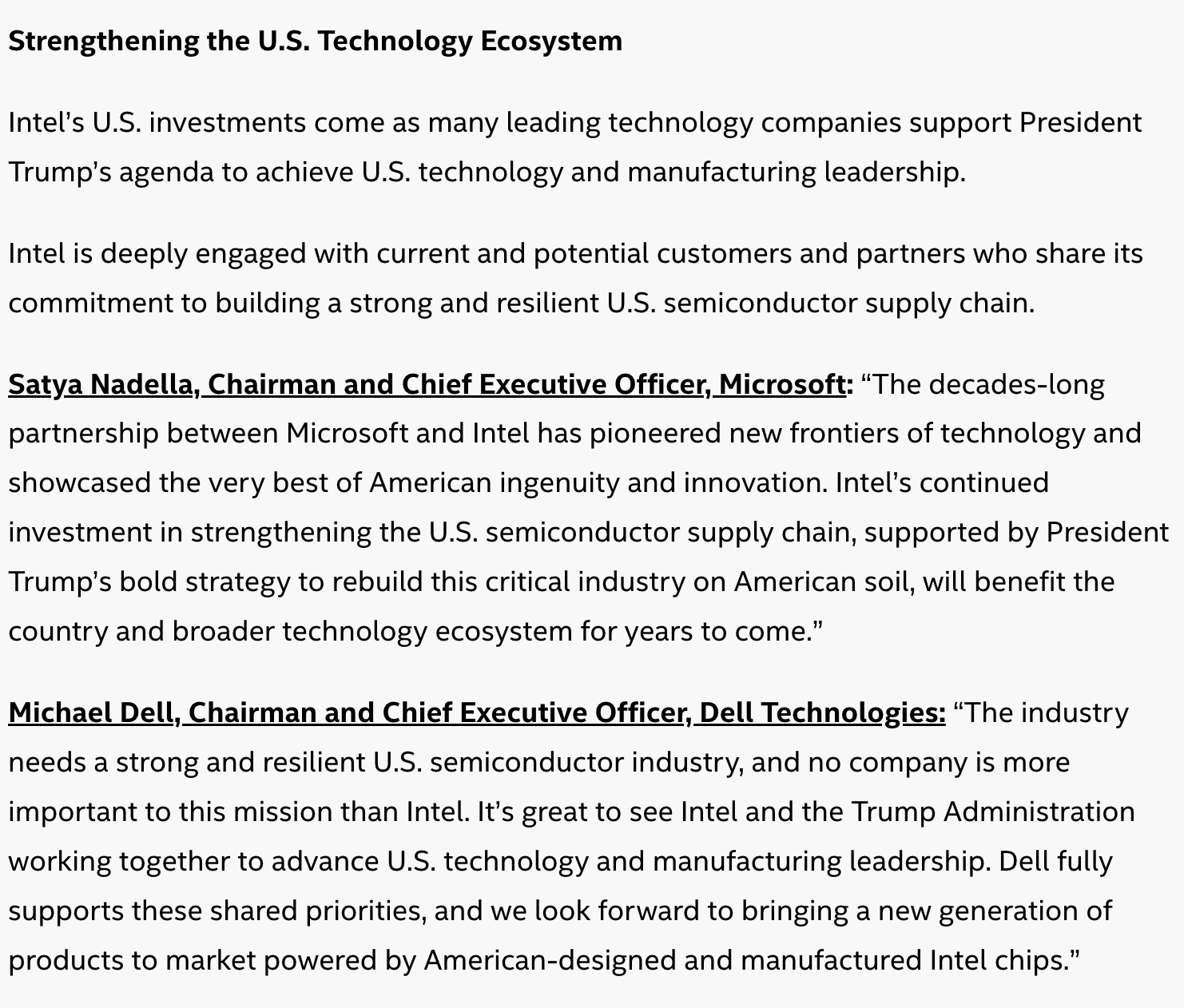
The official release said the government agreed to buy 433.3 million primary shares at $20.47 per share, equal to a 9.9 percent stake. Intel described the ownership as passive, with no board representation or governance rights.
Why the Intel Trade Paid +$310.88
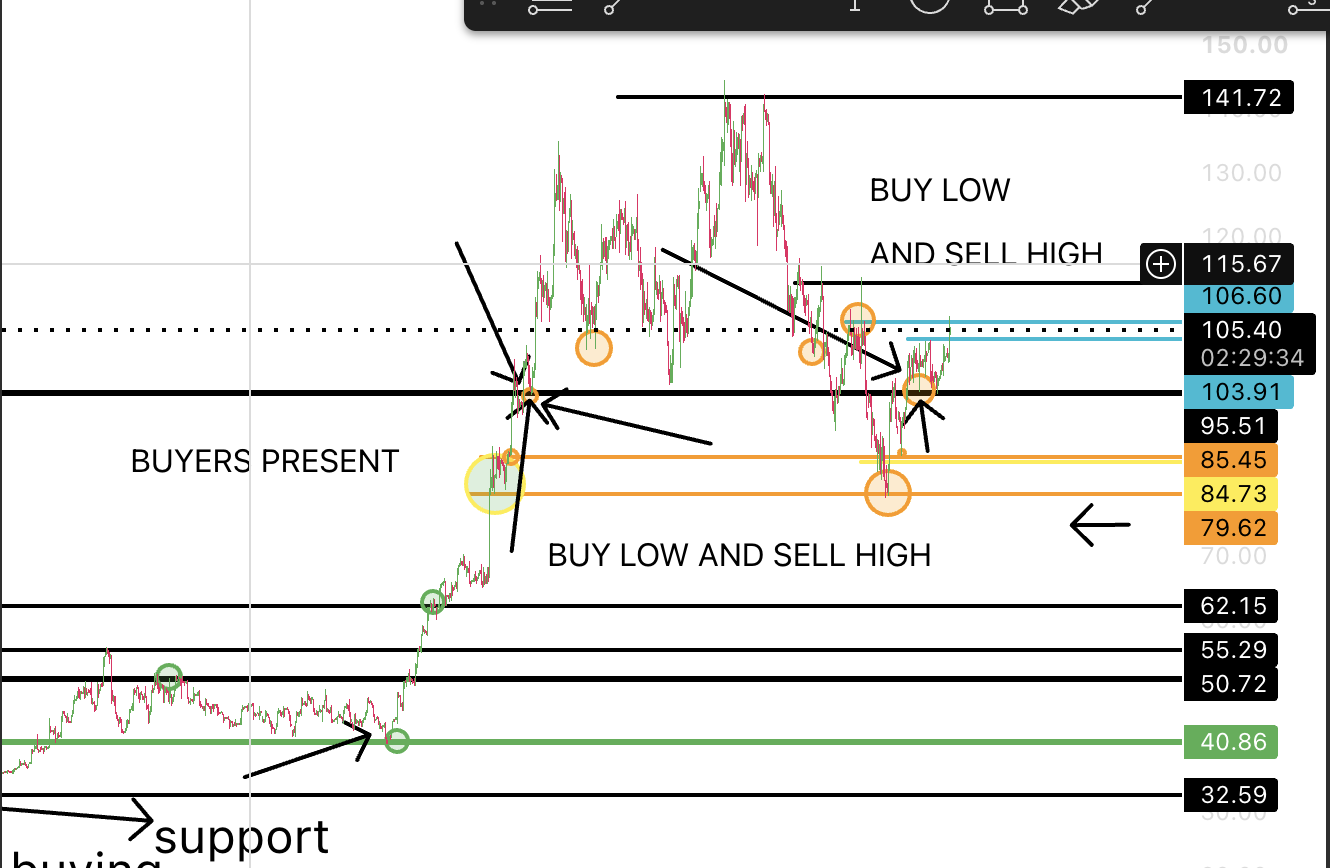
The trade paid because the news and chart lined up. The government investment gave Intel fresh attention, but the chart still showed where buyers were present, where support mattered, and where the sell-high zone started to become realistic.
That is the Stackmode approach: buy low where buyers are proving they exist, sell high into strength, and do not confuse a good headline with a risk-free trade. The screenshot shows multiple support reactions before the move pushed back toward overhead levels.
Catalyst
The Intel government investment headline gave the stock attention and a reason for traders to watch the chart.
Structure
The trade still needed support, buyer reaction, and a level-based plan instead of a late emotional entry.
Profit
The +$310.88 result came from execution on one setup. It is proof of process, not proof that every future Intel trade works.
Exit
The chart had overhead levels where selling into strength made more sense than hoping the move would never stop.

Key Intel Trade Levels From the Chart
The chart matters because it turns news into a trade plan. Without levels, a trader is only reacting to headlines. With levels, the trader can define where buyers showed up, where the trade is wrong, and where profit should be protected.
| Chart Zone | What It Means | Trade Lesson |
|---|---|---|
| Support area | A zone where buyers previously reacted. | Plan entries near support instead of chasing after the move. |
| Buyer reaction | The chart showed demand returning around key levels. | Let buyers prove interest before risking capital. |
| Resistance overhead | Prior sell zones can slow or reject price. | Take profit into strength instead of assuming unlimited upside. |
| Invalidation | The place where the trade idea stops making sense. | A catalyst does not remove the need for a stop or risk limit. |
The Risk: Government Backing Does Not Make Intel Risk-Free
This is where traders have to stay honest. The U.S. government investment was meaningful, but Intel still trades like a public stock. Price can reject, gaps can happen, dilution can matter, headlines can fade, and a trade can fail even when the news sounds strong.
Intel disclosed in its SEC filing that the transaction and government ownership may create additional risks and uncertainties. That matters because the market does not only price the headline. It prices execution, terms, shareholder impact, business performance, and future expectations.
Honest limit: the +$310.88 result is one trade result from one setup. It does not mean Intel is guaranteed to move higher, and it does not mean buying any government-backed headline is a good trade. The process matters more than the headline.
Sources Used for the Intel Government Investment Details
The factual Intel investment details in this recap are sourced from the official Intel newsroom announcement, Intel's investor relations release, and Intel's August 22, 2025 SEC Form 8-K.
FAQ
What happened with Intel and the U.S. government?
Intel announced on August 22, 2025 that the U.S. government would make an $8.9 billion investment in Intel common stock tied to CHIPS Act and Secure Enclave funding.
How much did the Intel trade make in this recap?
This Stackmode recap is built around a +$310.88 Intel trade result. That is a single trade result, not a promise that future Intel trades will pay.
Was the government Intel investment a buy signal by itself?
No. The news created a catalyst, but the trade still needed chart structure, support, resistance, risk control, and a plan for taking profit.
What were the most important Intel levels in the chart?
The supplied chart highlights buyer reaction near support, a buy-low zone, resistance overhead, and planned sell-high areas. The key lesson is respecting levels instead of chasing the news.
Is this Intel article financial advice?
No. This is a trade recap and education article. Stocks can move against any setup, and a past +$310.88 result does not guarantee future profit.
For more trade education, read the earlier Intel trade breakdown, how to buy stocks low and sell high, and the neuro trading guide.
For live entries, recaps, and market breakdowns, go to Catch Our Trades. For market scanning and prep, use StackFinder.
Trading Books
Keep Learning After The Article
Pick the book that matches the skill you want to practice next. Each one gives you a focused framework to work through after this article, with Amazon paperback and eBook options available.
Recommended starting point
Neuro Trading
Master the psychology of trading.
- Why 90% of traders lose and how to think like the 10%
- Emotional discipline techniques used by stronger traders
- A mindset framework built for long-term execution
eBook
$9.99
Paperback
$19.99
Audiobook
$9.99

Before The Hype
How to spot opportunities before they go viral.
- Learn the asset stacking strategy for long-term wealth
- Find high-signal trends before they become crowded
- Think earlier instead of chasing late momentum
eBook
$9.99
Paperback
$19.99
Audiobook
$9.99
Freedom Money
Understand Bitcoin and what it does.
- A cleaner beginner path into Bitcoin
- Protect and grow money with stronger awareness
- Build conviction before you move capital
eBook
$9.99
Paperback
$19.99
Audiobook
$9.99
Want Help Turning News Into A Real Trade Plan?
Pick one clean next action instead of bouncing around the site.
START HERE
Stackmode Trading School
Join the school for live classes, market review, organized lessons, StackFinder access, and member support. $499/year — StackFinder included.
Best value
StackMode Trading School
Live group sessions, stock and crypto market review, organized video lessons, StackFinder access, and a Halal spot-trading framework. $499/year.
Live class plan
Live Group Sessions Included
Bring questions, review charts, and learn the same repeatable process with students moving through the class plan together.
StackFinder
StackFinder Member Tools
AI scanner, personal watchlist, daily stock and crypto setups, dashboards, and trade-prep tools are included with the group.
Education and risk disclosure
Stackmode provides education, tools, examples, and market commentary only. Nothing on this site is personalized financial, investment, tax, or legal advice, and no result, trade recap, screenshot, testimonial, alert, or example is a promise of future performance. Trading and investing involve substantial risk of loss, including the possible loss of capital. You are responsible for your own decisions, position size, broker selection, tax treatment, and compliance with the laws and rules that apply in your location.
Read the full risk disclosure