Book a quick call and we can review trade management, risk, and setups together.
Quick Answer — What happened
This recap walks through a short put on IWM at the $300 strike using a weekly expiry. IWM (the iShares Russell 2000 ETF) is a broad small-cap index trade, and a short put lets you collect premium while defining your risk with a stop on the shortfall. In this session the trade played out to a 1:6.92 risk:reward result, with the tracked account snapshot showing a +52% return on the day.
The video below covers the full walkthrough: the plan before entry, the chart structure, how the trade was managed, and the account P&L screenshot. Below that I break out the setup step by step so you can see the thinking behind each decision.
The Setup: Why a Short Put on IWM
A short put is an options trade where you sell a put option at a strike you are willing to own the underlying at. You collect a credit (premium) up front. Your maximum profit is that credit. Your job is to keep the trade on the right side of the strike through expiry.
Why IWM here instead of a single stock:
- Diversification by design. IWM tracks the Russell 2000, so one contract represents a basket of small-cap companies rather than betting on a single earnings report.
- Defined, bounded risk. A short put has a clear expiration and a known downside boundary, which makes position sizing and risk planning simpler than an uncovered directional bet.
- The $300 strike fits the plan. The strike was placed at a level that matched the trade thesis and the weekly expiry window. Selling the put there meant premium was collected while the strike sat at a level the plan was comfortable defending.
The key discipline: a short put is not just "collect free money." The premium is compensation for the risk you take on. The whole setup only works when the strike, the expiry, and the management plan are all defined before you place the order.
Reading the Chart
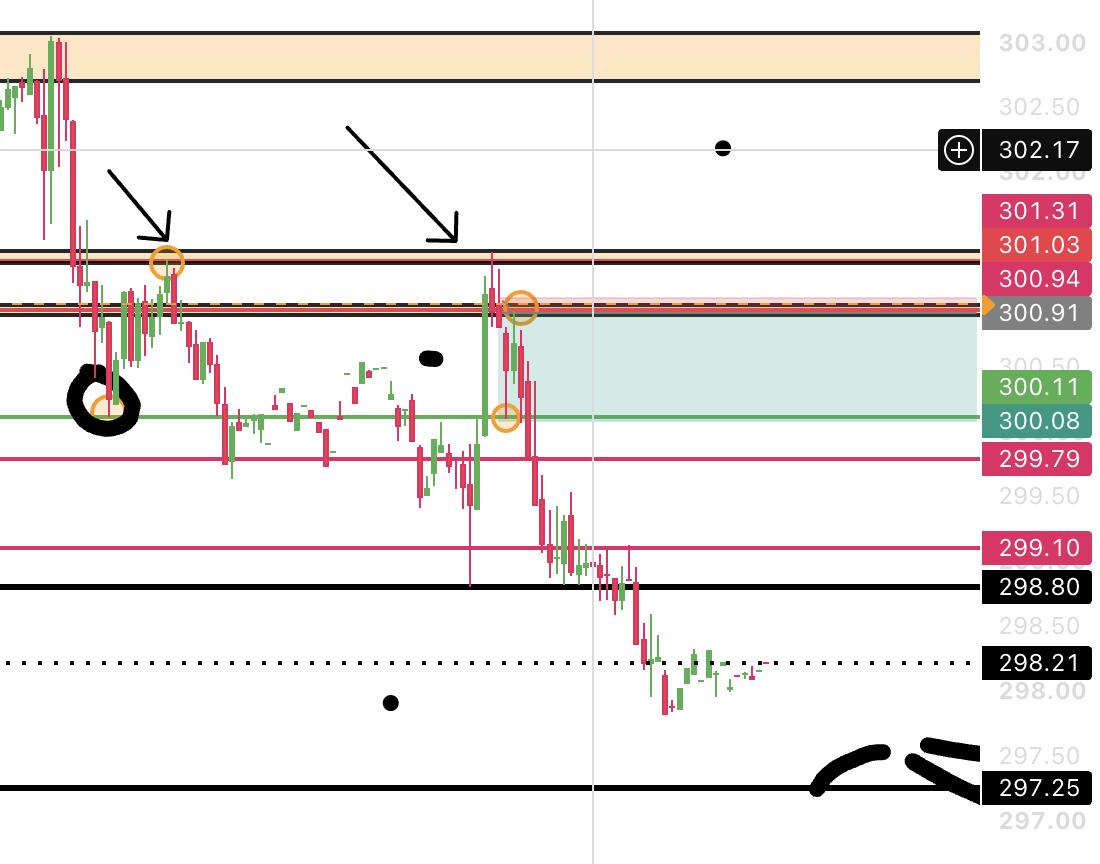
Before the trade, the chart tells you where price has been, where it is respected, and where the risk lives. In this case the focus was on the area around the $300 strike and whether IWM could hold that region through the weekly expiry.
- Read the level, not the forecast. The question was never "will IWM rally?" It was "can it stay above $300 long enough for the sold put to expire worthless or be bought back at a profit?"
- Identify the invalidation point. Every short put needs a level where the thesis is wrong — if price breaks through and closes below that zone with momentum, the trade changes from "collecting premium" into "defending a losing position."
- Match time to conviction. A weekly expiry rewards you faster if the level holds, but it also gives the market less time to recover from a sudden dip. That trade-off is exactly why management rules matter.
Entry & the Plan
A good entry is less about timing the exact tick and more about entering when the setup matches the plan. Before clicking buy/sell, the checklist was:
- Strike: $300 — the level the thesis was built around.
- Expiry: Weekly — a defined, near-term window that fits the analysis.
- Where the trade is invalidated: the stop / shortfall level, decided before entry, not after.
- Target: the profit objective tied to buying the put back for a fraction of what it was sold for.
Writing all four down before clicking is what separates a trade from a gamble. If you cannot state the invalidation level in one sentence, you are not ready to enter.
Managing the Trade
Management is where most of the skill actually lives. After entry, IWM could do one of three things — and each had a pre-planned response:
- Price holds the strike → hold the position. The plan is working. Let the time decay and stock action do the work, and only act if the conditions the plan was built on change.
- Price dips but holds the invalidation zone → watch, don't panic. Small dips are normal. The reaction is to let the defined management level decide, not to emotionally exit the moment a candle turns red.
- Price breaks the invalidation level → reduce or exit. The thesis is wrong, and the risk that was accepted at entry has now been reached. This is the moment the trade was planned for: cut the defined loss and preserve capital.
Notice that emotions never enter the decision in that list. Management rules exist precisely so you don't have to make a panicked decision in real time.
Exit & The Result (1:6.92 RR)
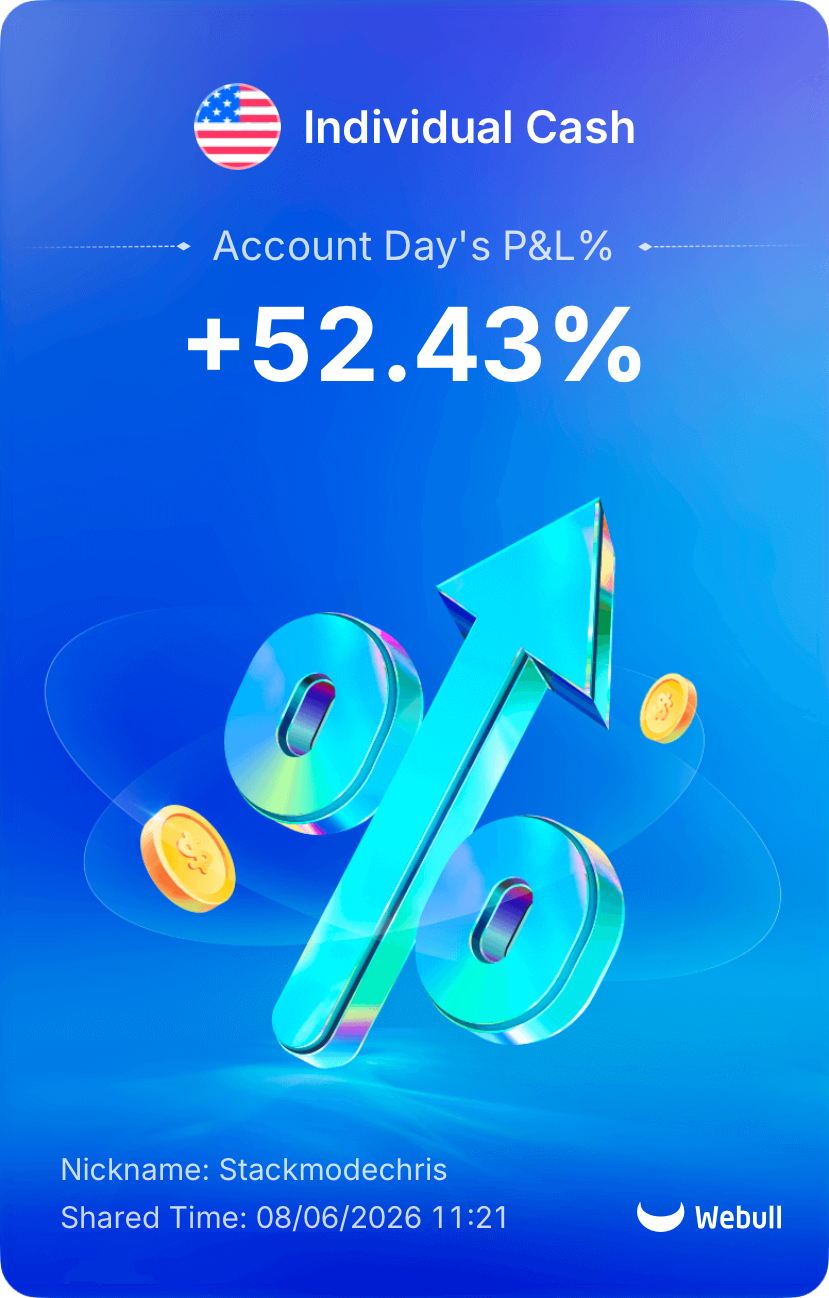
The trade resolved in profit. The stated result — 1:6.92 risk:reward — means the amount gained was roughly 6.92 times the amount risked. That favorable ratio is the direct payoff of a defined-risk setup: because risk was capped and sized at entry, a single winning trade can cover the cost of several small losing trades when the win rate holds.
The account snapshot reflects a +52% return on the day. The follow-through questions to review honestly:
- Did the exit happen at the planned level, or did I exit early / late and leave edge on the table?
- Was position size consistent with my rules, or was this an oversized win that flattered the day?
- Would I take the identical trade again tomorrow? If the answer is no, the trade teaches me something.
A good trade is defined by whether the decision was correct given what was known at entry — not by whether it won. This one delivered both: a sound plan and a favorable outcome.
Risk & Position Sizing
Short puts look deceptively safe because the win rate is often high — but the losses, when they come, can be large. That is exactly why position sizing is non-negotiable.
- Risk per trade is a fixed percentage of the account, not a "feel" number. Decide the number before you enter.
- Size each position so that a full loss equals that fixed percentage. Small position, big risk? Adjust. Big position, tiny risk? Adjust.
- Daily loss limits stop the bleed. If the account is down a set amount in a day, you stop trading for the day. Protecting capital keeps you in the game for the next edge.
- Assignment risk is real. If a short put expires in the money, you may be assigned the shares. Plan for that outcome with cash or the ability to manage it — never run a short put you could not cover.
The 1:6.92 reward here is only useful because the risk side was controlled. A high reward-to-risk ratio means nothing if you blow up the account sizing one trade at 100% of your capital.
Watch the Walkthrough
Watch the short walkthrough here — it explains the trade plan, adjustments, and risk controls.
Gallery
Notes & Setup
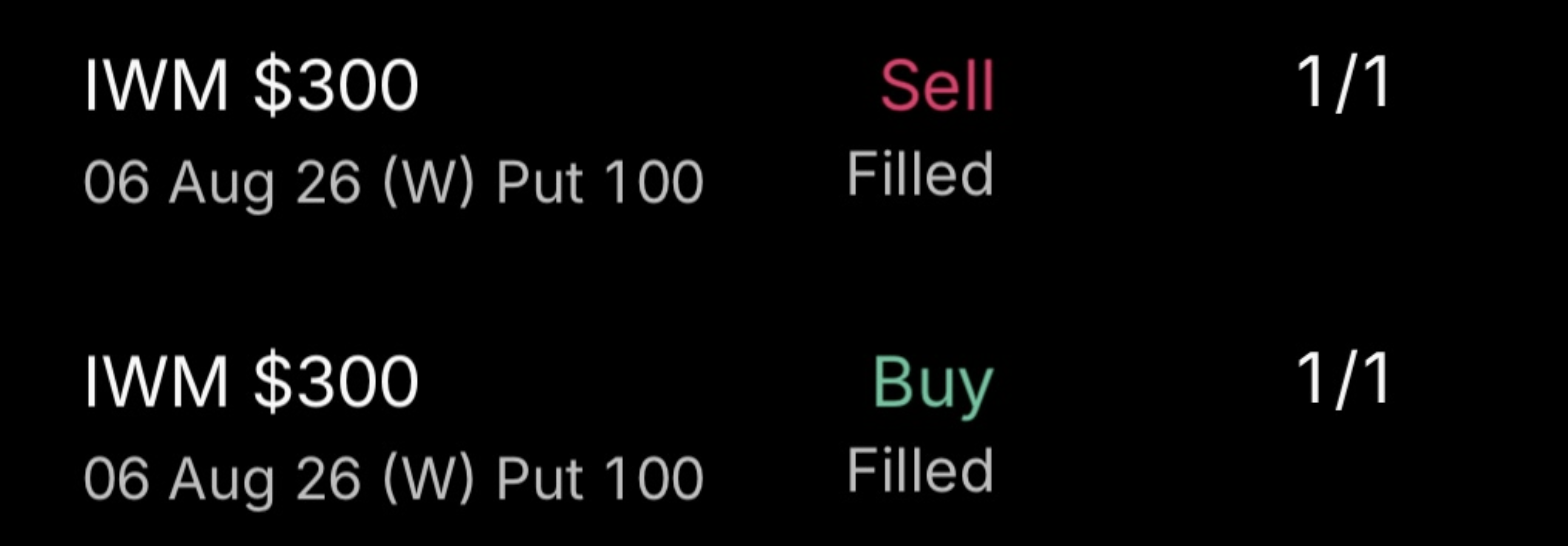
- Trade: Short put on IWM at the $300 strike (weekly expiry shown).
- Risk/Reward shown in the video: 1:6.92 RR.
- Day result in the tracked account snapshot: +52%.
- Educational walkthrough; not a recommendation to enter the same trade.
Risk Disclaimer
This content is for educational purposes only and is not financial, investment, or trading advice. Options trading and short puts involve substantial risk, including the possible loss of more than the initial premium and the risk of assignment. Past performance — including the trade shown here — does not guarantee future results. Always consult a qualified financial professional and never trade with money you cannot afford to lose.
Want help reviewing this setup?
Pick one clean next action instead of bouncing around the site.
START HERE
Stackmode Trading School
Join the school for live classes, market review, organized lessons, StackFinder access, and member support. $499/year — StackFinder included.
Best value
StackMode Trading School
Live group sessions, stock and crypto market review, organized video lessons, StackFinder access, and a Halal spot-trading framework. $499/year.
Live class plan
Live Group Sessions Included
Bring questions, review charts, and learn the same repeatable process with students moving through the class plan together.
StackFinder
StackFinder Member Tools
AI scanner, personal watchlist, daily stock and crypto setups, dashboards, and trade-prep tools are included with the group.
Education and risk disclosure
Stackmode provides education, tools, examples, and market commentary only. Nothing on this site is personalized financial, investment, tax, or legal advice, and no result, trade recap, screenshot, testimonial, alert, or example is a promise of future performance. Trading and investing involve substantial risk of loss, including the possible loss of capital. You are responsible for your own decisions, position size, broker selection, tax treatment, and compliance with the laws and rules that apply in your location.
Read the full risk disclosure