Use this article as a starting point, then join the $50/month Trading School for live classes, market review, organized lessons, and StackFinder access.
The Danger of Trading the Wick
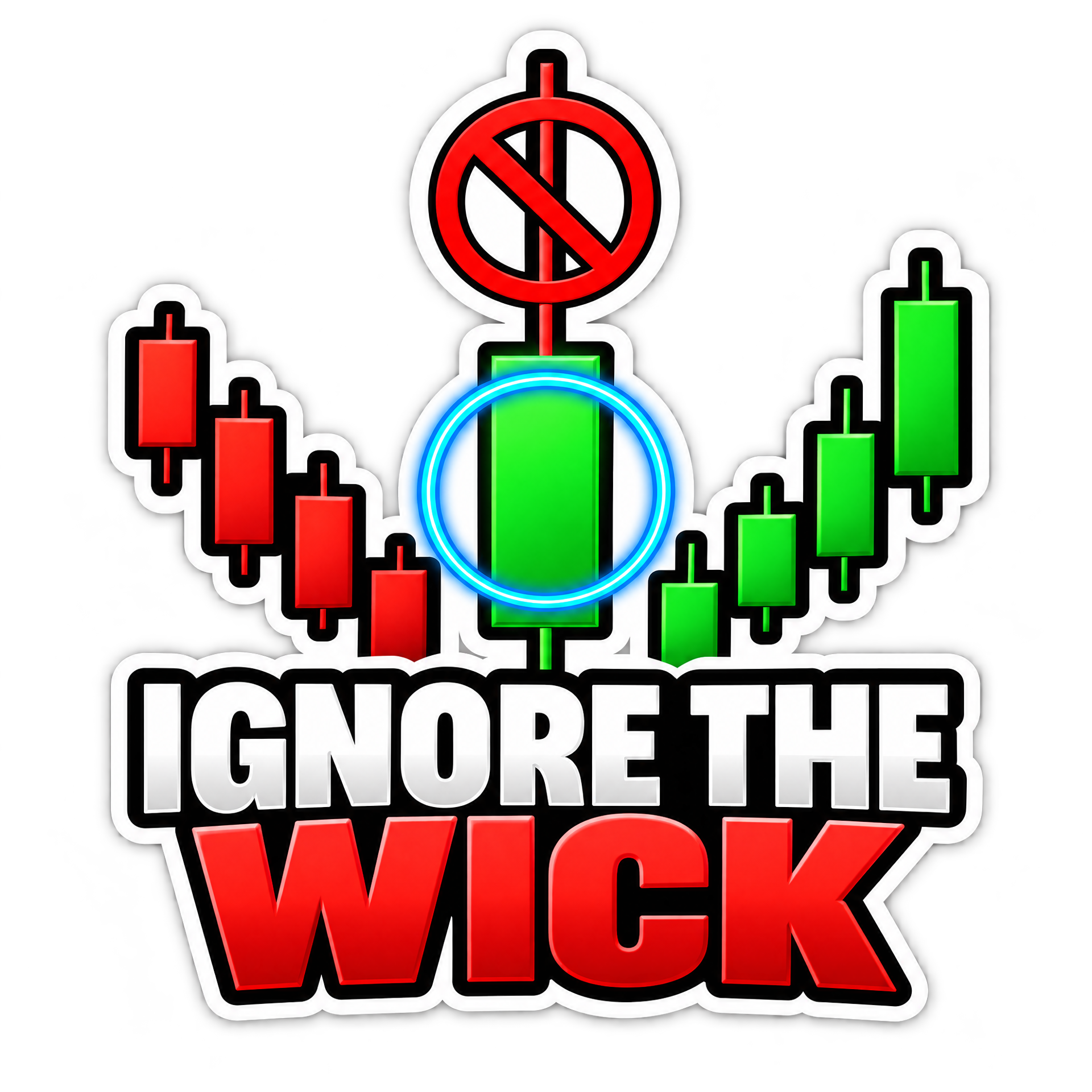
Have you ever entered a trade because a candle looked incredibly bullish or bearish, only to have it reverse and stop you out minutes later? This happens when you trade the wick instead of waiting for the close.
During the formation of a candle (especially on higher timeframes like the 1-hour or 4-hour), the price can fluctuate wildly. Institutions often use these intra-candle movements to trap retail traders into taking positions in the wrong direction.
Why the Close is the Ultimate Confirmation
The candle close is the final print of data for that timeframe. It solidifies the market's decision. A candle might push above a key resistance level temporarily (creating a long wick), but if it closes below that resistance, the breakout has failed.
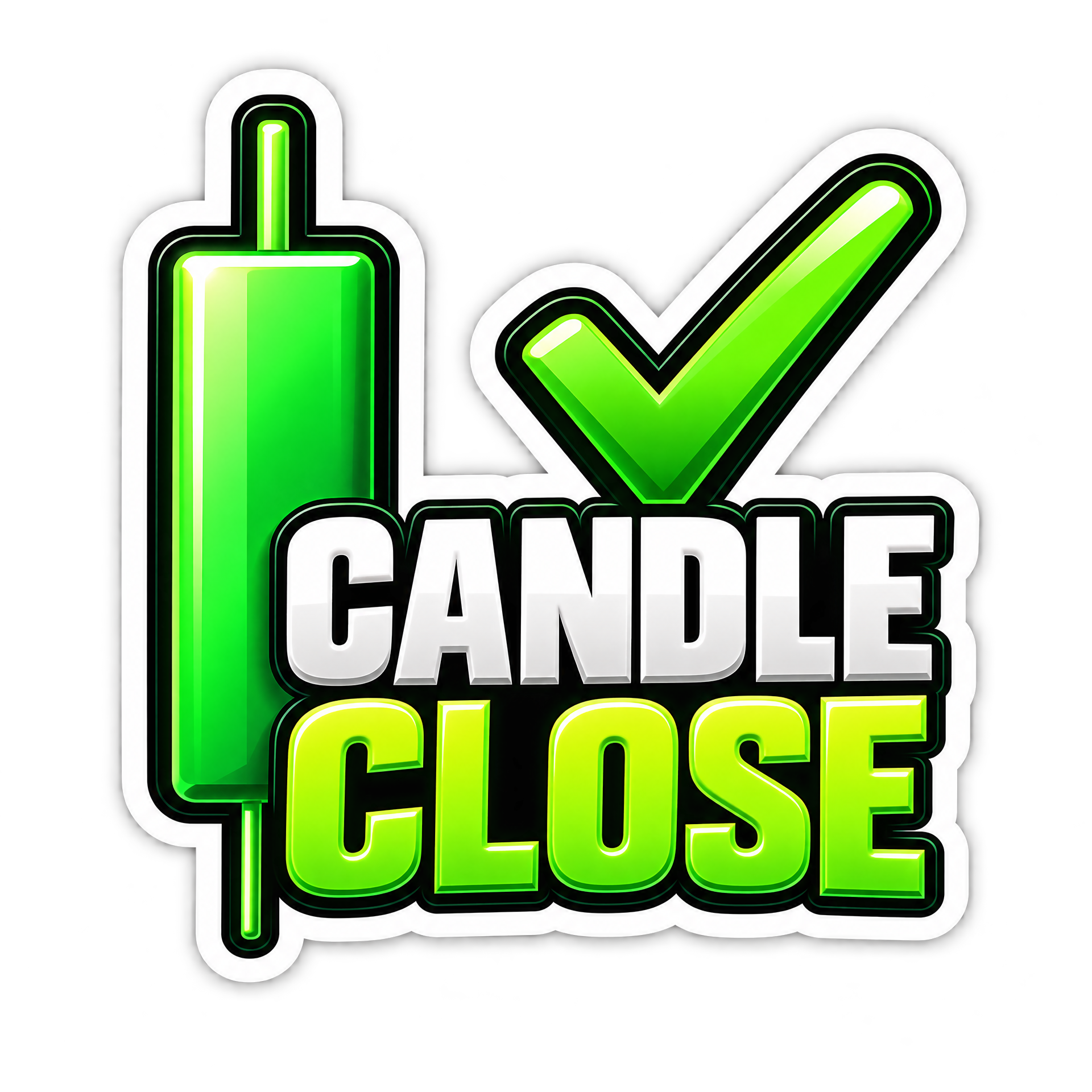
- Wait for Confirmation: Never assume a breakout is real until the candle closes beyond the key level.
- Timeframe Consistency: If you are trading a setup based on the 15-minute chart, you must wait for the 15-minute candle to close.
- Avoid the Fakeout: Most "fakeouts" are just wicks that never closed.
How to Balance Wicks and Closes
While the close provides confirmation, the wick provides context. A long wick combined with a strong close in the opposite direction is a powerful signal of rejection. The key is to wait for the close to validate what the wick is suggesting.
Honest Limits
- Waiting Can Mean Worse Pricing: Waiting for a candle to close sometimes means getting a slightly worse entry price if the momentum is extremely strong. This is the cost of confirmation.
- No Guarantees: Even a strong candle close in your direction does not guarantee a winning trade. Risk management must always be applied.
FAQ
Why is the candle close important in trading?
The candle close represents the final agreed-upon price between buyers and sellers for a specific timeframe. While wicks show where the price traveled, the close shows where the market actually settled, making it a more reliable indicator of true market sentiment and momentum.
Should I ignore candle wicks completely?
No, wicks are not useless. Long wicks indicate rejection and liquidity sweeps, showing where buyers or sellers stepped in strongly. However, the wick alone without a confirmed candle close can lead to entering trades prematurely.
Best-Fit Framework: What This Topic Can and Cannot Tell You
Why the Candle Close Matters More Than the Wick is best understood as an educational framework: define the decision, compare the available choices, verify current evidence, and keep the downside explicit before acting.
| Option or lens | Best for | Honest limit |
|---|---|---|
| Definition | Clarifying what the topic actually means | A definition does not predict a market outcome. |
| Process | Turning the idea into repeatable research steps | A process still depends on execution and current conditions. |
| Risk check | Sizing uncertainty and writing invalidation rules | Risk controls reduce exposure; they do not remove loss. |
Research Checklist and Related Stackmode Lessons
Use primary sources for current rules and the related Stackmode pages for connected market context. The links are learning paths, not promises that a result will transfer from one market or person to another.
Visual Study Opportunities
These are useful visual checkpoints for a future revision or companion graphic. They make the explanation easier to scan without presenting an unverified chart, number, or performance claim as proof.
- 1. A one-sentence definition card with the key term highlighted.
- 2. A labeled process diagram showing research before execution.
- 3. A comparison table with the same criteria across alternatives.
- 4. A before-and-after example that clearly labels assumptions.
- 5. A timeline showing which facts are current and which are historical.
- 6. A risk ladder from low complexity to high complexity.
- 7. A checklist for source, date, cost, liquidity, and invalidation.
- 8. A worked example using hypothetical values rather than a promise.
- 9. A common-mistakes graphic with the correction beside each mistake.
- 10. A final decision tree showing when to pause and verify more evidence.
Expanded FAQ
What is the main idea of this article?
The main idea is to understand why the candle close matters more than the wick as a process with defined assumptions, risks, and verification steps rather than as a guaranteed outcome.
Who is this article for?
It is for readers who want an educational framework before making a market, trading, or investing decision.
What should a beginner do first?
Start with the definition, identify the instrument or market involved, and write down the risk before thinking about an entry or action.
What information should be verified?
Verify the product rules, current data, costs, timing, liquidity, source date, and any claim that could change the decision.
What is the biggest mistake to avoid?
The biggest mistake is treating an educational explanation as a promise and skipping independent risk checks.
How does risk management fit in?
Risk management sets the position size, invalidation point, maximum loss, and review process before execution.
Can this approach guarantee a profit?
No. Markets are uncertain, and no framework can guarantee a profit or remove loss risk.
How current is this information?
Market rules, prices, products, and policy can change, so check the dated primary source before acting.
Should this replace professional advice?
No. It is general education, not personalized financial, tax, legal, or investment advice.
How should readers compare alternatives?
Compare the same criteria: purpose, issuer, liquidity, costs, volatility, custody, time horizon, and honest limitations.
What should be written in a trading plan?
Record the thesis, setup, entry condition, invalidation, size, maximum loss, exit logic, and review date.
Why do source dates matter?
A dated source shows when a rule, number, or statement was true and helps expose stale or unsupported claims.
How can readers reduce confirmation bias?
Write what would disprove the thesis, review opposing evidence, and avoid relying on one headline or one chart.
What is a sensible next step?
Use the article as a checklist, verify the primary sources, and practice with risk that is small enough to survive mistakes.
Where can readers continue learning?
Use the linked Stackmode lessons for market context and the linked regulator or exchange resources for current rules.
Conclusion: Use the Framework, Then Verify the Decision
Why the Candle Close Matters More Than the Wick is best understood as an educational framework: define the decision, compare the available choices, verify current evidence, and keep the downside explicit before acting. The useful takeaway is not a prediction. It is a repeatable process: define the topic, compare the available choices, verify current sources, size risk conservatively, and record what would change your mind.
Stackmode provides educational market context, not guaranteed returns or personalized financial advice. Recheck current rules, prices, liquidity, and tax implications before acting.
Free trading playbook
Build the plan before you place the trade.
Get the Stackmode playbook for pullbacks, risk limits, entries, exits, and trade review. It is a practical first step before you sign up for the Trading School.
- • Define the setup before entry
- • Mark invalidation and risk
- • Stop chasing moves
- • Review decisions, not just results
Opens the external Stackmode playbook page. Education only.
Trading Books
Keep Learning After The Article
Pick the book that matches the skill you want to practice next. Each one gives you a focused framework to work through after this article, with Amazon paperback and eBook options available.
Recommended starting point
Neuro Trading
Master the psychology of trading.
- Why 90% of traders lose and how to think like the 10%
- Emotional discipline techniques used by stronger traders
- A mindset framework built for long-term execution
eBook
$9.99
Paperback
$19.99
Audiobook
$9.99
Before The Hype
How to spot opportunities before they go viral.
- Learn the asset stacking strategy for long-term wealth
- Find high-signal trends before they become crowded
- Think earlier instead of chasing late momentum
eBook
$9.99
Paperback
$19.99
Audiobook
$9.99
Freedom Money
Understand Bitcoin and what it does.
- A cleaner beginner path into Bitcoin
- Protect and grow money with stronger awareness
- Build conviction before you move capital
eBook
$9.99
Paperback
$19.99
Audiobook
$9.99
Turn This Article Into The Next Move
Pick one clean next action instead of bouncing around the site.
START HERE
Stackmode Trading School
Join the Whop group for live classes, market review, organized lessons, StackFinder access, and member support.
Best value
StackMode Trading School
Join the Whop group for live group sessions, stock and crypto market review, organized video lessons, StackFinder access, and a Halal spot-trading framework.
Live class plan
Live Group Sessions Included
Bring questions, review charts, and learn the same repeatable process with students moving through the class plan together.
StackFinder
StackFinder Member Tools
AI scanner, personal watchlist, daily stock and crypto setups, dashboards, and trade-prep tools are included with the group.
Education and risk disclosure
Stackmode provides education, tools, examples, and market commentary only. Nothing on this site is personalized financial, investment, tax, or legal advice, and no result, trade recap, screenshot, testimonial, alert, or example is a promise of future performance. Trading and investing involve substantial risk of loss, including the possible loss of capital. You are responsible for your own decisions, position size, broker selection, tax treatment, and compliance with the laws and rules that apply in your location.
Read the full risk disclosure