
Get structured trading education, planned review, and clearer decision-making support from StackmodeChris.
Quick Answer: Smart Trading Is Structured Effort, Not Constant Activity
Working smart in trading means spending your effort where it improves decision quality: study a defined market, wait for a setup, control the downside, execute the plan, and review what actually happened. Working harder by taking more trades or staring at charts longer can just multiply unplanned decisions.
The mindset shift is simple: measure yourself by the quality of your process before you judge the result. A clean losing trade can teach you something. A lucky winning trade can still hide a dangerous habit.
Watch the Video: Work Smart, Do Not Just Work Hard
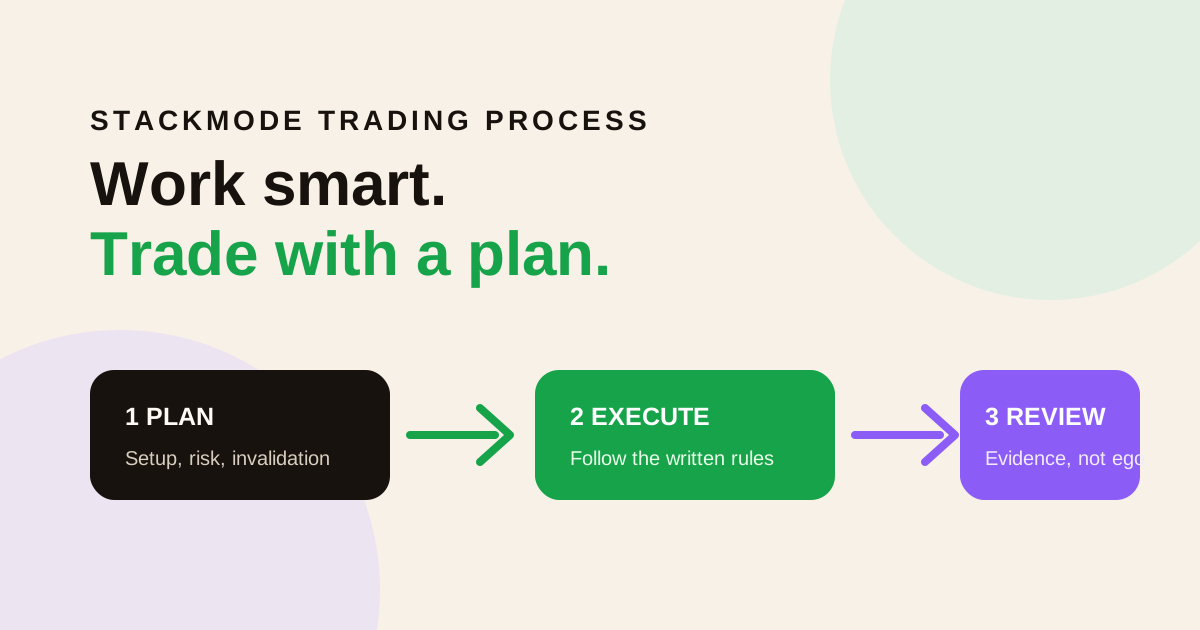
This article expands the Stackmode lesson into a practical trading mindset framework. Watch the original video, then use the process below to turn the idea into behavior.
What Working Smart Looks Like for a Trader
Smart work reduces avoidable decisions. It does not mean looking for shortcuts or avoiding the difficult parts of learning. It means choosing a smaller set of actions that improve your edge, protect your capital, and make your mistakes visible.
Study With a Question
Review a market or setup with a specific question instead of consuming endless alerts and opinions.
Wait for a Condition
Define what must be true before entry, including the level, trigger, invalidation, and size.
Review the Evidence
Compare the plan with the execution so one emotional result does not rewrite your whole system.
Build a Trading Process That Makes Effort Count
A process turns motivation into something repeatable. Keep it short enough to follow when the market moves quickly, and specific enough that you can tell whether you followed it.
- Choose the market and session: reduce the number of instruments and time windows you are trying to master at once.
- Write the setup before entry: record the reason, entry area, invalidation, target idea, and position size.
- Set a stop for decision fatigue: define when you stop studying or trading for the session, especially after a rule break.
- Save the evidence: keep the chart and a short note showing what you knew before the outcome.
- Review one improvement: select one behavior to repeat or correct next session instead of changing everything.
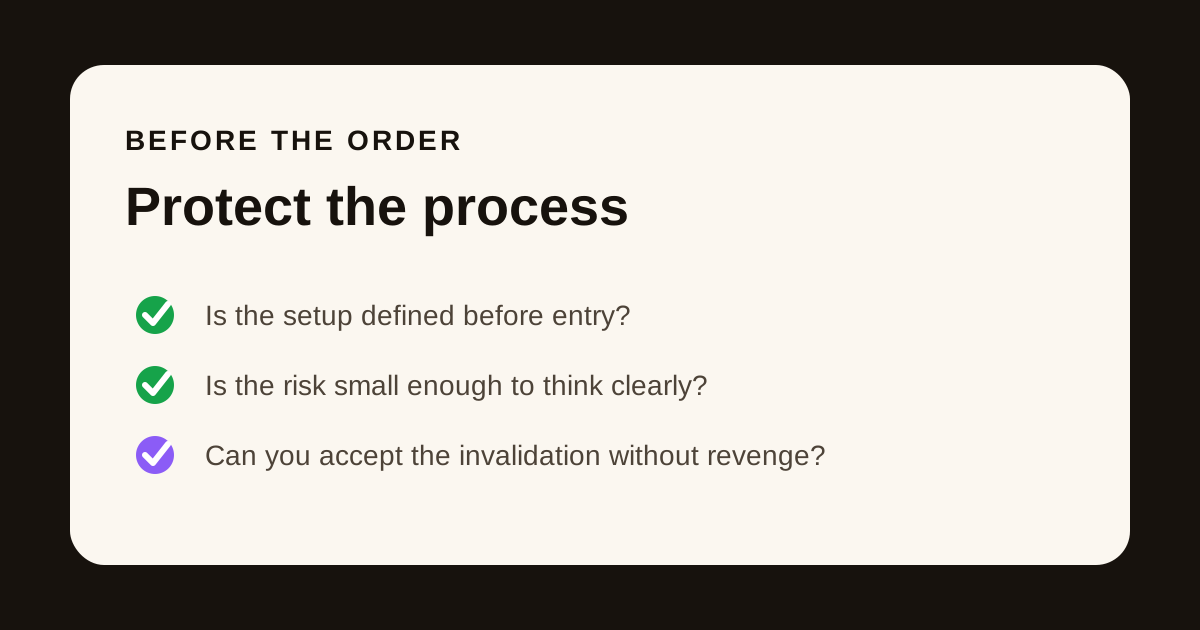
For a deeper review routine, read how to journal your trades and how accountability builds trading discipline.
Protect Your Mindset When Pressure Rises
Pressure usually exposes the process you already have. If the position is too large, the plan is vague, or the last loss still feels personal, your brain will look for relief instead of following a rule.
Make the next decision easier before pressure arrives. Lower size until the loss is emotionally tolerable. Use a written invalidation instead of improvising one. If you missed the entry, wait for a new setup. If you broke a rule, stop and document it before taking another trade.
That is the difference between discipline and self-punishment. Discipline creates a boundary that protects future decisions. Punishment tries to recover a feeling through another risky decision.
Common Ways Traders Work Hard but Improve Slowly
- Confusing screen time with deliberate practice: more hours do not help if you never define what you are studying.
- Collecting strategies instead of testing one: constant switching makes it difficult to learn what actually works for you.
- Taking action to feel productive: a trade is not proof that you did good work.
- Changing rules after one outcome: review a meaningful sample and execution pattern before redesigning the process.
- Using motivation as risk control: position size, loss limits, and a stop-trading rule are more reliable than confidence.
Risk and the Honest Limit of a Trading Mindset
A strong mindset cannot make an uncertain market predictable. FINRA warns that day trading can be extremely risky and may not be appropriate for people with limited resources, experience, or low risk tolerance. Read FINRA's day-trading risk disclosure and review Investor.gov's explanation of investment risk.
Do not trade essential money, borrow to force a result, or let a teacher, alert, or social feed pressure you into a position. This article is educational, not individualized financial advice. Working smart gives your process a better chance to survive; it does not guarantee profit.
FAQ
What does work smarter, not harder mean in trading?
It means replacing random screen time and constant activity with a repeatable process: define the setup, size the risk, execute the plan, and review the evidence. More trades and more hours do not automatically create better decisions.
How can I build a better trading mindset?
Start with a written plan, a defined loss limit, smaller size when emotions rise, and a journal that records decisions before outcomes. Review behavior and execution, not only profit and loss.
Does working harder make you a better trader?
Not by itself. Study and practice can improve skill, but overtrading, excessive screen time, and oversized positions can make decision quality worse. The work needs structure and recovery.
Can a trading mindset guarantee profits?
No. Mindset and process can improve preparation and consistency, but markets remain uncertain. Losses, slippage, changing conditions, and strategy limitations are always possible.
Best-Fit Framework: What This Topic Can and Cannot Tell You
Work Smart Don't Just Work Hard: The Trading Mindset That Changes Everything is best understood as an educational framework: define the decision, compare the available choices, verify current evidence, and keep the downside explicit before acting.
| Option or lens | Best for | Honest limit |
|---|---|---|
| Definition | Clarifying what the topic actually means | A definition does not predict a market outcome. |
| Process | Turning the idea into repeatable research steps | A process still depends on execution and current conditions. |
| Risk check | Sizing uncertainty and writing invalidation rules | Risk controls reduce exposure; they do not remove loss. |
Research Checklist and Related Stackmode Lessons
Use primary sources for current rules and the related Stackmode pages for connected market context. The links are learning paths, not promises that a result will transfer from one market or person to another.
Visual Study Opportunities
These are useful visual checkpoints for a future revision or companion graphic. They make the explanation easier to scan without presenting an unverified chart, number, or performance claim as proof.
- 1. A one-sentence definition card with the key term highlighted.
- 2. A labeled process diagram showing research before execution.
- 3. A comparison table with the same criteria across alternatives.
- 4. A before-and-after example that clearly labels assumptions.
- 5. A timeline showing which facts are current and which are historical.
- 6. A risk ladder from low complexity to high complexity.
- 7. A checklist for source, date, cost, liquidity, and invalidation.
- 8. A worked example using hypothetical values rather than a promise.
- 9. A common-mistakes graphic with the correction beside each mistake.
- 10. A final decision tree showing when to pause and verify more evidence.
Expanded FAQ
What is the main idea of this article?
The main idea is to understand work smart don't just work hard: the trading mindset that changes everything as a process with defined assumptions, risks, and verification steps rather than as a guaranteed outcome.
Who is this article for?
It is for readers who want an educational framework before making a market, trading, or investing decision.
What should a beginner do first?
Start with the definition, identify the instrument or market involved, and write down the risk before thinking about an entry or action.
What information should be verified?
Verify the product rules, current data, costs, timing, liquidity, source date, and any claim that could change the decision.
What is the biggest mistake to avoid?
The biggest mistake is treating an educational explanation as a promise and skipping independent risk checks.
How does risk management fit in?
Risk management sets the position size, invalidation point, maximum loss, and review process before execution.
Can this approach guarantee a profit?
No. Markets are uncertain, and no framework can guarantee a profit or remove loss risk.
How current is this information?
Market rules, prices, products, and policy can change, so check the dated primary source before acting.
Should this replace professional advice?
No. It is general education, not personalized financial, tax, legal, or investment advice.
How should readers compare alternatives?
Compare the same criteria: purpose, issuer, liquidity, costs, volatility, custody, time horizon, and honest limitations.
What should be written in a trading plan?
Record the thesis, setup, entry condition, invalidation, size, maximum loss, exit logic, and review date.
Why do source dates matter?
A dated source shows when a rule, number, or statement was true and helps expose stale or unsupported claims.
How can readers reduce confirmation bias?
Write what would disprove the thesis, review opposing evidence, and avoid relying on one headline or one chart.
What is a sensible next step?
Use the article as a checklist, verify the primary sources, and practice with risk that is small enough to survive mistakes.
Where can readers continue learning?
Use the linked Stackmode lessons for market context and the linked regulator or exchange resources for current rules.
Conclusion: Use the Framework, Then Verify the Decision
Work Smart Don't Just Work Hard: The Trading Mindset That Changes Everything is best understood as an educational framework: define the decision, compare the available choices, verify current evidence, and keep the downside explicit before acting. The useful takeaway is not a prediction. It is a repeatable process: define the topic, compare the available choices, verify current sources, size risk conservatively, and record what would change your mind.
Stackmode provides educational market context, not guaranteed returns or personalized financial advice. Recheck current rules, prices, liquidity, and tax implications before acting.
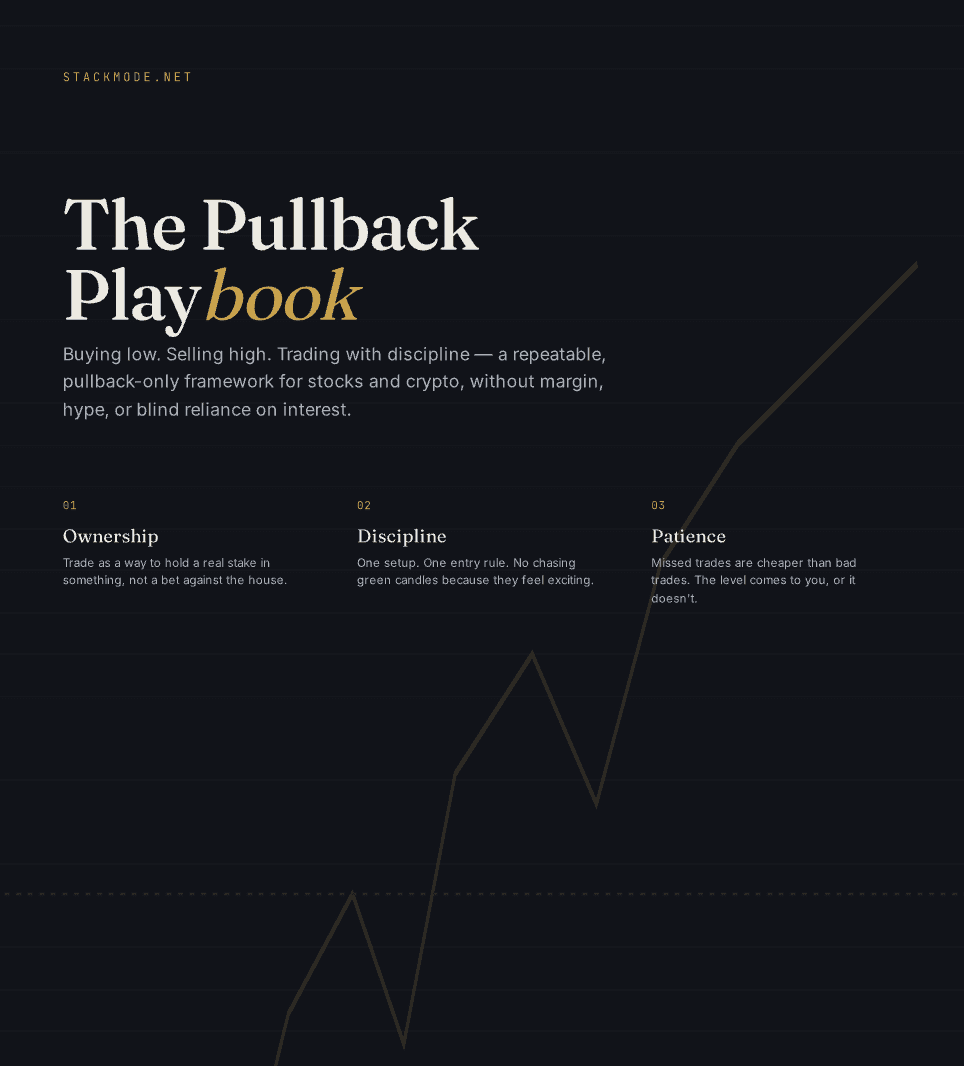
Free trading playbook
Build the plan before you place the trade.
Get the Stackmode playbook for pullbacks, risk limits, entries, exits, and trade review. It is a practical first step before you sign up for the Trading School.
- • Define the setup before entry
- • Mark invalidation and risk
- • Stop chasing moves
- • Review decisions, not just results
Opens the external Stackmode playbook page. Education only.
Trading Books
Keep Learning After The Article
Pick the book that matches the skill you want to practice next. Each one gives you a focused framework to work through after this article, with Amazon paperback and eBook options available.
Recommended starting point
Neuro Trading
Master the psychology of trading.
- Why 90% of traders lose and how to think like the 10%
- Emotional discipline techniques used by stronger traders
- A mindset framework built for long-term execution
eBook
$9.99
Paperback
$19.99
Audiobook
$9.99
Before The Hype
How to spot opportunities before they go viral.
- Learn the asset stacking strategy for long-term wealth
- Find high-signal trends before they become crowded
- Think earlier instead of chasing late momentum
eBook
$9.99
Paperback
$19.99
Audiobook
$9.99
Freedom Money
Understand Bitcoin and what it does.
- A cleaner beginner path into Bitcoin
- Protect and grow money with stronger awareness
- Build conviction before you move capital
eBook
$9.99
Paperback
$19.99
Audiobook
$9.99
Build a Smarter Trading Process
Pick one clean next action instead of bouncing around the site.
START HERE
Stackmode Trading School
Join the school for live classes, market review, organized lessons, StackFinder access, and member support. $499/year — StackFinder included.
Best value
StackMode Trading School
Live group sessions, stock and crypto market review, organized video lessons, StackFinder access, and a Halal spot-trading framework. $499/year.
Live class plan
Live Group Sessions Included
Bring questions, review charts, and learn the same repeatable process with students moving through the class plan together.
StackFinder
StackFinder Member Tools
AI scanner, personal watchlist, daily stock and crypto setups, dashboards, and trade-prep tools are included with the group.
Education and risk disclosure
Stackmode provides education, tools, examples, and market commentary only. Nothing on this site is personalized financial, investment, tax, or legal advice, and no result, trade recap, screenshot, testimonial, alert, or example is a promise of future performance. Trading and investing involve substantial risk of loss, including the possible loss of capital. You are responsible for your own decisions, position size, broker selection, tax treatment, and compliance with the laws and rules that apply in your location.
Read the full risk disclosure