
Use Stackmode market breakdowns to connect inflation data, precious-metal price action, and position risk without treating a hedge as a guarantee.
Quick Answer: Gold and Silver Can Diversify, But They Are Not Guaranteed Inflation Hedges
Gold and silver may help diversify a portfolio during some inflationary or monetary-stress environments, but neither metal reliably rises every time consumer prices rise. Their performance can also depend on real interest rates, the dollar, growth expectations, industrial demand, investor positioning, and how quickly the market has already priced in the inflation story.
The right question is not “Will gold go up?” It is “What risk am I trying to hedge, what exposure am I choosing, how much volatility can I accept, and what would make the hedge thesis wrong?” Physical metal, funds, miners, and futures create very different outcomes.
Watch the Video: Is Gold and Silver a Good Inflation Hedge?
Watch the original StackmodeChris lesson, then use this guide to compare the inflation thesis with the actual risks of each precious-metals exposure.
What an Inflation Hedge Is Supposed to Do
Inflation reduces the purchasing power of money over time. An inflation hedge is an asset or strategy intended to preserve real purchasing power or offset some inflation-related losses. That does not mean the asset must rise every month inflation rises, and it does not mean the hedge will match an individual household's costs.
Purchasing Power
Ask whether the position is intended to preserve long-term real value, not just produce a nominal gain.
Diversification
A hedge can reduce concentration in one risk, but it may introduce storage, product, or market risk of its own.
Timing
An asset can hedge a long horizon imperfectly while losing value over a shorter period.
Gold vs Silver: Similar Theme, Different Exposures
Gold is often viewed primarily through a monetary, reserve, and store-of-value lens. Silver also has industrial demand, which can make its price more sensitive to manufacturing and economic cycles. Both metals can be volatile, and the relationship between inflation and metal prices is not mechanically one-to-one.
| Exposure | Potential Role | Risks to Check |
|---|---|---|
| Gold | Monetary diversification and a potential store-of-value allocation. | Real rates, dollar strength, storage, spread, and price volatility. |
| Silver | Precious-metal exposure with additional industrial-demand sensitivity. | Higher volatility, economic-cycle exposure, liquidity, and spreads. |
| Mining companies | Equity exposure to metal prices and company operations. | Costs, debt, management, labor, energy, and political risk. |
Ways to Invest in Gold and Silver
The instrument changes the risk. Owning a metal, owning a fund share, buying a mining stock, and trading a futures contract are not interchangeable decisions even when they reference the same theme.
- Physical coins or bars: consider authenticity, premiums, dealer spreads, storage, insurance, theft, and selling liquidity.
- Exchange-traded products: review fees, structure, tracking, custody, liquidity, and what the product actually holds.
- Mining equities: evaluate the company's balance sheet, production costs, jurisdiction, management, and equity-market behavior.
- Futures: understand contract value, tick size, margin, expiration, rollover, leverage, and liquidation before trading.
- Digital or pooled claims: verify the issuer, redemption terms, custody, counterparty, and legal structure rather than relying on a label.
Build a Precious-Metals Plan Before You Buy
A hedge should be designed around the risk it is meant to address. Decide whether you are concerned about inflation, currency weakness, market concentration, financial stress, or short-term trading volatility. Then choose the exposure and size that match the time horizon.
- Define the job: write the exact risk the metal is intended to offset.
- Choose the vehicle: compare physical, fund, mining, and futures exposure on cost, liquidity, and control.
- Set the size: keep the allocation consistent with your total portfolio and ability to tolerate drawdowns.
- Plan the exit: decide when the hedge is no longer needed or when the thesis has changed.
- Review the result: measure real purchasing-power outcomes, not only whether the metal price rose.
For the inflation data behind this discussion, read Understanding the Consumer Price Index. For longer-horizon behavior, read Investing Is A Life Long Journey.
Common Gold and Silver Investing Mistakes
- Assuming inflation guarantees a rally: real rates, currency moves, growth, and expectations can dominate the short-term reaction.
- Ignoring the premium: physical metal can require a price increase just to overcome the purchase spread and costs.
- Confusing miners with metal: company operations can overwhelm the underlying commodity move.
- Using futures without sizing: leverage can make a small price move produce a large account change.
- Concentrating too heavily: a hedge that becomes the entire portfolio is no longer managing concentration risk.
Risk and Honest Limits
Gold and silver can lose value, underperform inflation, or remain volatile for long periods. Physical assets carry storage and authenticity concerns, funds carry product and intermediary risks, miners carry business risk, and futures carry leverage and liquidation risk. This article is educational and does not provide financial, legal, tax, or personalized investment advice.
Verify current product documents, fees, contract specifications, tax treatment, and custody arrangements before investing. Use risk capital, avoid guarantees, and do not increase exposure solely because a metal has recently moved higher.
FAQ
Is gold always a good hedge against inflation?
No. Gold can protect purchasing power in some environments, but it can also be flat or fall while inflation is elevated. Real interest rates, the dollar, growth expectations, investor positioning, and the type and timing of inflation all matter.
Is silver better than gold during inflation?
Neither is universally better. Silver has both monetary and industrial demand and can be more volatile. Gold is typically treated as the more established monetary precious metal, but both can experience drawdowns and neither guarantees protection.
What is the difference between physical metals and a gold or silver fund?
Physical metals involve ownership, storage, insurance, dealer spreads, and liquidity considerations. A fund may provide easier market access but introduces product structure, fees, tracking, and intermediary risks. Read the specific product documents before investing.
Are gold miners the same as owning gold?
No. Mining companies have operating costs, debt, management, labor, energy, political, and equity-market risks in addition to metal-price exposure. A miner can underperform or outperform the metal for company-specific reasons.
Should investors use gold futures as an inflation hedge?
Futures use leverage and require an understanding of contract size, margin, expiration, rollover, tick value, and liquidation risk. They are not a simple substitute for unleveraged exposure and can create losses larger than expected.
Continue with Stackmode crypto education, review macro data through the CPI guide, or study market breakdowns through Catch Our Trades.
Best-Fit Framework: What This Topic Can and Cannot Tell You
Investing in Gold & Silver: Is it a Good Hedge Against Inflation? is best understood as an educational framework: define the decision, compare the available choices, verify current evidence, and keep the downside explicit before acting.
| Option or lens | Best for | Honest limit |
|---|---|---|
| Definition | Clarifying what the topic actually means | A definition does not predict a market outcome. |
| Process | Turning the idea into repeatable research steps | A process still depends on execution and current conditions. |
| Risk check | Sizing uncertainty and writing invalidation rules | Risk controls reduce exposure; they do not remove loss. |
Research Checklist and Related Stackmode Lessons
Use primary sources for current rules and the related Stackmode pages for connected market context. The links are learning paths, not promises that a result will transfer from one market or person to another.
Visual Study Opportunities
These are useful visual checkpoints for a future revision or companion graphic. They make the explanation easier to scan without presenting an unverified chart, number, or performance claim as proof.
- 1. A one-sentence definition card with the key term highlighted.
- 2. A labeled process diagram showing research before execution.
- 3. A comparison table with the same criteria across alternatives.
- 4. A before-and-after example that clearly labels assumptions.
- 5. A timeline showing which facts are current and which are historical.
- 6. A risk ladder from low complexity to high complexity.
- 7. A checklist for source, date, cost, liquidity, and invalidation.
- 8. A worked example using hypothetical values rather than a promise.
- 9. A common-mistakes graphic with the correction beside each mistake.
- 10. A final decision tree showing when to pause and verify more evidence.
Expanded FAQ
What is the main idea of this article?
The main idea is to understand investing in gold & silver: is it a good hedge against inflation? as a process with defined assumptions, risks, and verification steps rather than as a guaranteed outcome.
Who is this article for?
It is for readers who want an educational framework before making a market, trading, or investing decision.
What should a beginner do first?
Start with the definition, identify the instrument or market involved, and write down the risk before thinking about an entry or action.
What information should be verified?
Verify the product rules, current data, costs, timing, liquidity, source date, and any claim that could change the decision.
What is the biggest mistake to avoid?
The biggest mistake is treating an educational explanation as a promise and skipping independent risk checks.
How does risk management fit in?
Risk management sets the position size, invalidation point, maximum loss, and review process before execution.
Can this approach guarantee a profit?
No. Markets are uncertain, and no framework can guarantee a profit or remove loss risk.
How current is this information?
Market rules, prices, products, and policy can change, so check the dated primary source before acting.
Should this replace professional advice?
No. It is general education, not personalized financial, tax, legal, or investment advice.
How should readers compare alternatives?
Compare the same criteria: purpose, issuer, liquidity, costs, volatility, custody, time horizon, and honest limitations.
What should be written in a trading plan?
Record the thesis, setup, entry condition, invalidation, size, maximum loss, exit logic, and review date.
Why do source dates matter?
A dated source shows when a rule, number, or statement was true and helps expose stale or unsupported claims.
How can readers reduce confirmation bias?
Write what would disprove the thesis, review opposing evidence, and avoid relying on one headline or one chart.
What is a sensible next step?
Use the article as a checklist, verify the primary sources, and practice with risk that is small enough to survive mistakes.
Where can readers continue learning?
Use the linked Stackmode lessons for market context and the linked regulator or exchange resources for current rules.
Conclusion: Use the Framework, Then Verify the Decision
Investing in Gold & Silver: Is it a Good Hedge Against Inflation? is best understood as an educational framework: define the decision, compare the available choices, verify current evidence, and keep the downside explicit before acting. The useful takeaway is not a prediction. It is a repeatable process: define the topic, compare the available choices, verify current sources, size risk conservatively, and record what would change your mind.
Stackmode provides educational market context, not guaranteed returns or personalized financial advice. Recheck current rules, prices, liquidity, and tax implications before acting.
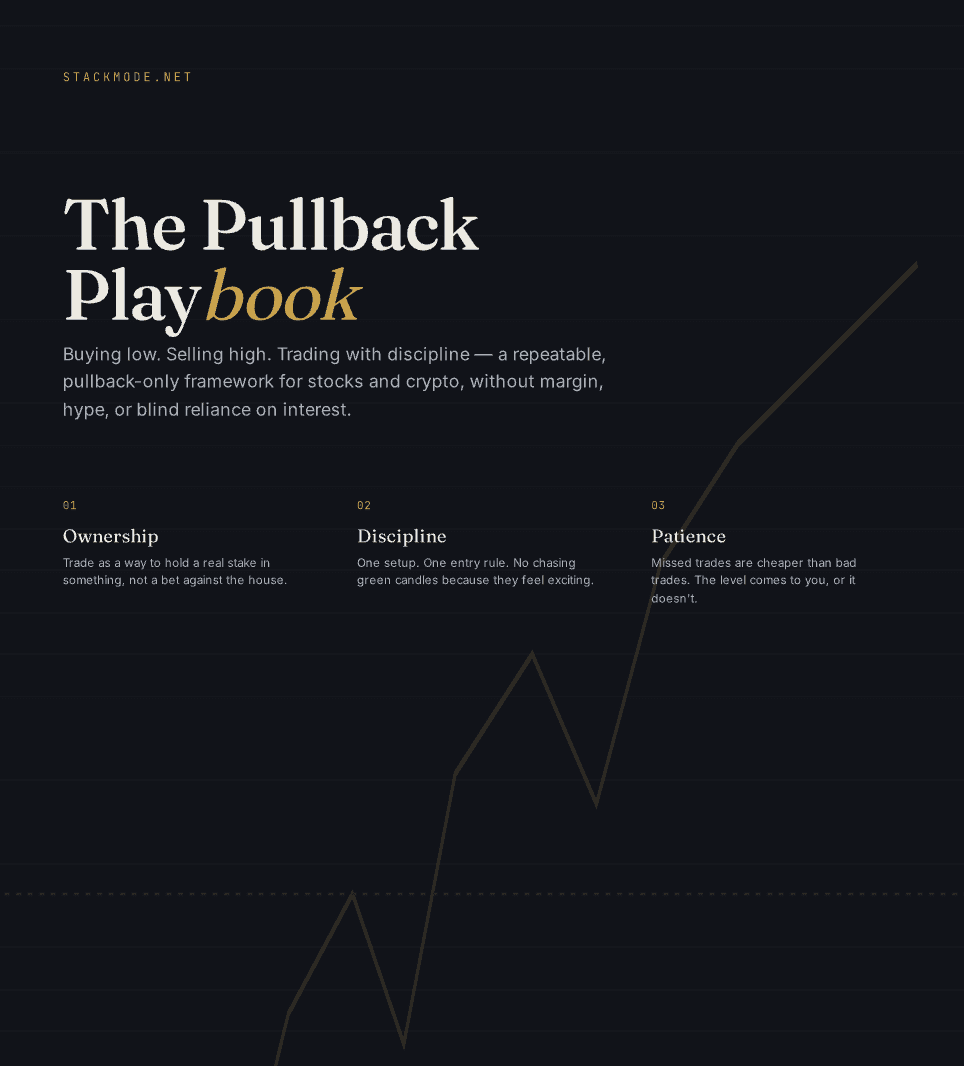
Free trading playbook
Build the plan before you place the trade.
Get the Stackmode playbook for pullbacks, risk limits, entries, exits, and trade review. It is a practical first step before you sign up for the Trading School.
- • Define the setup before entry
- • Mark invalidation and risk
- • Stop chasing moves
- • Review decisions, not just results
Opens the external Stackmode playbook page. Education only.
Trading Books
Keep Learning After The Article
Pick the book that matches the skill you want to practice next. Each one gives you a focused framework to work through after this article, with Amazon paperback and eBook options available.
Recommended starting point
Neuro Trading
Master the psychology of trading.
- Why 90% of traders lose and how to think like the 10%
- Emotional discipline techniques used by stronger traders
- A mindset framework built for long-term execution
eBook
$9.99
Paperback
$19.99
Audiobook
$9.99
Before The Hype
How to spot opportunities before they go viral.
- Learn the asset stacking strategy for long-term wealth
- Find high-signal trends before they become crowded
- Think earlier instead of chasing late momentum
eBook
$9.99
Paperback
$19.99
Audiobook
$9.99
Freedom Money
Understand Bitcoin and what it does.
- A cleaner beginner path into Bitcoin
- Protect and grow money with stronger awareness
- Build conviction before you move capital
eBook
$9.99
Paperback
$19.99
Audiobook
$9.99
Study Inflation, Markets, and Risk Together
Pick one clean next action instead of bouncing around the site.
START HERE
Stackmode Trading School
Join the school for live classes, market review, organized lessons, StackFinder access, and member support. $499/year — StackFinder included.
Best value
StackMode Trading School
Live group sessions, stock and crypto market review, organized video lessons, StackFinder access, and a Halal spot-trading framework. $499/year.
Live class plan
Live Group Sessions Included
Bring questions, review charts, and learn the same repeatable process with students moving through the class plan together.
StackFinder
StackFinder Member Tools
AI scanner, personal watchlist, daily stock and crypto setups, dashboards, and trade-prep tools are included with the group.
Education and risk disclosure
Stackmode provides education, tools, examples, and market commentary only. Nothing on this site is personalized financial, investment, tax, or legal advice, and no result, trade recap, screenshot, testimonial, alert, or example is a promise of future performance. Trading and investing involve substantial risk of loss, including the possible loss of capital. You are responsible for your own decisions, position size, broker selection, tax treatment, and compliance with the laws and rules that apply in your location.
Read the full risk disclosure